The success of the Trans Mountain pipeline expansion has made one thing clear: Canada needs another pipeline to West Coast tidewater. The next one should follow the route with the best chance of being approved, built responsibly and operated safely.
A lesson from TMX experience
I say this as someone who had direct responsibility for this file. As federal minister of Natural Resources, I was involved during one of the most difficult periods in TMX's history. After the Federal Court of Appeal set aside the approval in 2018, the federal government had to strengthen Indigenous consultation, meaningfully address legitimate concerns and ensure the final decision could withstand legal, constitutional and public scrutiny.
That experience taught me an important lesson: major projects are not built simply because someone draws a line on a map. They move forward when proponents and governments understand the land, respect Indigenous rights, manage risks honestly and choose the route with the strongest chance of being built properly.

Why the southern route is practical
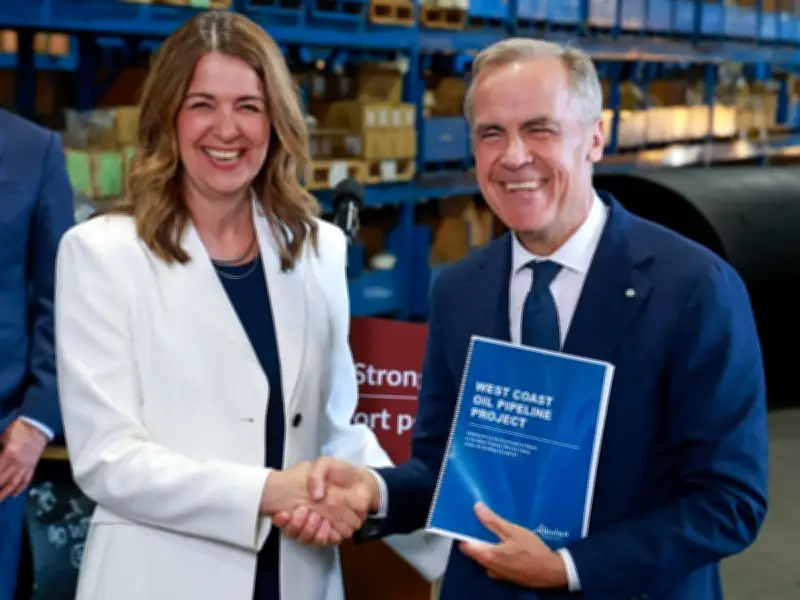
That is why the decision by Prime Minister Mark Carney and Premier Danielle Smith to pursue a new pipeline along the existing TMX corridor is not just politically sensible, it is practical, responsible and grounded in hard-earned experience. For decades, Canada has sold most of its oil to one customer — the United States. That relationship will always matter, but relying too heavily on a single market has weakened our position and too often forced us to accept lower prices for our resources.
TMX changed that equation. The expanded system nearly tripled pipeline capacity from Alberta to the West Coast, improved access to Asian markets and demonstrated that demand for Canadian energy grows when we can move it reliably to tidewater. The question now is how Canada builds on that success in the most practical and responsible way.
Challenges of a northern route
To some people, a northern route to the northwest coast of British Columbia may seem attractive because it offers a more direct path to Asia. But pipelines are built across real land — through communities, Indigenous territories, rivers, mountains, coastlines and areas subject to serious legal and constitutional obligations.
A northwest route would be an entirely new undertaking. It would require years of technical work, land assessment, marine terminal planning and port infrastructure. It would also cross difficult terrain and many Indigenous territories, requiring deep consultation with First Nations whose rights, title, lands, waters and livelihoods could be affected.
Indigenous consultation is key
Through the TMX process, I learned that Indigenous consultation is not a procedural step to be completed at the end. It is a constitutional duty and a moral responsibility. It requires trust, early engagement, careful listening and a willingness to respond to concerns about water, safety, cultural sites, jobs and economic benefits.
That work is difficult even along an existing corridor. Along a brand-new northern route, it would be far more complex. A northwest route would also face tanker restrictions on parts of the northern B.C. coast.
According to Amarjeet Sohi, former federal minister of Natural Resources, the southern route along the existing TMX corridor offers the strongest chance of being approved, built responsibly and operated safely.