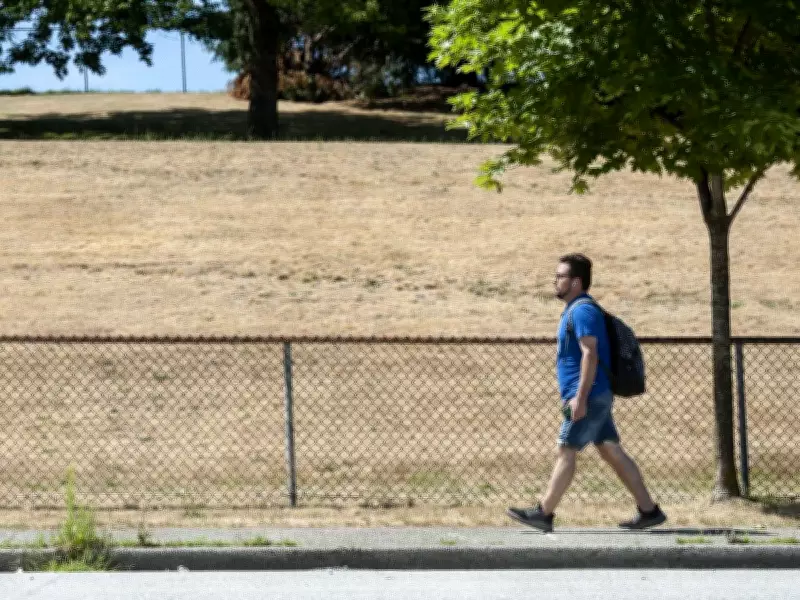
Lawn sprinklers across Metro Vancouver will soon go silent as the region moves directly into stricter Stage 2 water restrictions weeks earlier than usual, prompted by drought concerns and a diminishing snowpack.
Stage 2 Restrictions Begin May 1
Stage 1 restrictions typically start on May 1, limiting lawn watering to specific days and times. However, Stage 2, which prohibits all lawn watering, is usually reserved for later in the summer when reservoirs face pressure. This year, officials are skipping ahead.
Starting May 1, all residential and non-residential lawn watering is banned. There will be no lawn watering any day of the week, and topping up water features like fountains is also prohibited.

What Can Be Watered?
Under Stage 2 restrictions, you cannot water your lawn at any time, including new lawns or those being treated for chafer beetles. However, trees, shrubs, and flowers can be watered any day from 5 a.m. to 9 a.m. if using an automatic or manual sprinkler, and at any time if hand-watering or using drip irrigation. Vegetable gardens can be watered at any time.
Non-residential properties face the same restrictions but gain an extra hour for automatic or manual sprinklers, starting at 4 a.m.
Reasons for Early Restrictions
Metro Vancouver cited drought concerns, below-normal snowpack levels, and forecasts of a dry summer as reasons for activating Stage 2 restrictions earlier. "It's very easy to see the mountains have barely any snow," said Jerry Dobrovolny, Metro Vancouver's chief administrative officer, during a Saturday board meeting. "At this point, our snowpack is about half of normal and considerably lower than last year."
Metro Vancouver residents use about one billion litres of treated water per day, but that amount spikes during warm weather, primarily due to lawn watering and outdoor use. In summer, outdoor use can increase demand by more than 50 percent, and even double during peak periods, Dobrovolny noted.
Snowpack Status
Provincially, British Columbia's mountain snowpack is at near-normal levels at 92 percent, higher than last year's average of 79 percent, according to the B.C. River Forecast Centre's April 1 survey. However, regional differences are stark.
The South Coast has a below-normal snowpack at 57 percent of normal, with some stations recording near or all-time lows. Other coastal and southern B.C. regions, including Vancouver Island, the Lower Thompson, Nicola, and the Okanagan, also have well-below-normal snowpack, making these areas more susceptible to drought conditions heading into spring and summer.
Residents are encouraged to conserve water and adapt to the early restrictions to help manage the region's water supply during the anticipated dry period.