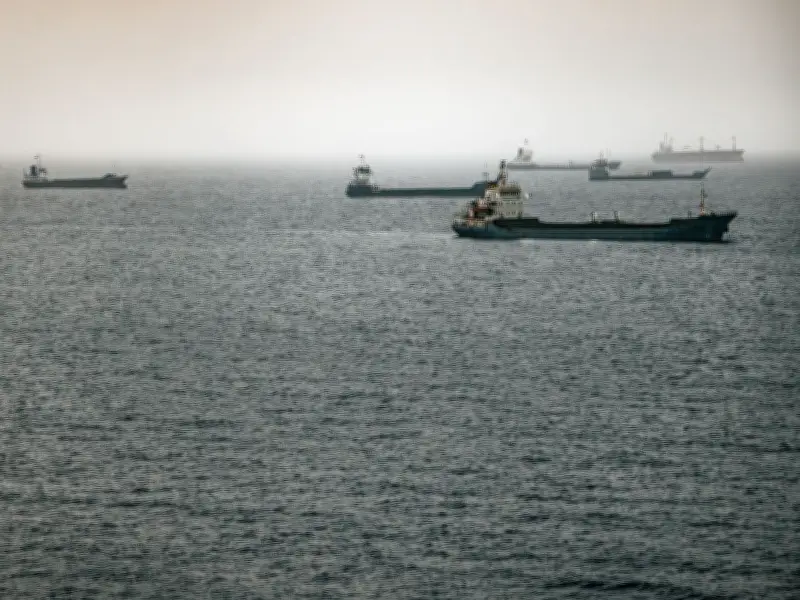
Seven tankers, including two fully-laden non-Iranian supertankers, were either in the Strait of Hormuz or had already crossed on Tuesday, according to vessel-tracking data compiled by Bloomberg. All of them were broadcasting their location, the data show.
Growing Confidence Among Shipowners
The shift “reflects a degree of strengthening confidence among shipowners, as Iran is expected to refrain from targeting vessels,” said Muyu Xu, senior crude oil analyst at Kpler Ltd. Still, it remains to be seen whether safe and unrestricted passage will indeed materialize, Xu cautioned. One other supertanker made its way into the Persian Gulf with its signal turned off, the vessel-tracking data show.
Impact of the Iran-U.S. Peace Deal
The reopening of Hormuz has been a bumpy process, but more oil has been able to move through the waterway after an interim peace deal between Iran and the U.S. fell into place. Iran said on Tuesday that the strait is fully open to commercial shipping and that large volumes of oil have been transiting, according to the semi-official Iranian Students’ News Agency. That followed a period over the weekend where domestic media said it had been closed.

Oil Prices Down Nearly 40%
Oil prices are down almost 40% from their peak during the conflict as a result of the thaw in tensions that’s paved the way for a resumption in traffic. In recent days, millions of barrels a day have made their way out at the fastest pace since the war erupted and U.S. President Donald Trump said on his Truth Social platform that bumper volumes were flowing.
Details of Current Transits
Among the current transits, the VLCC Universal Glory entered the strait on Tuesday morning from inside the Persian Gulf, hauling 2 million barrels of Saudi crude. It’s taking a route near the middle of the strait, and lists South Korea as its destination. Trailing it are two products tankers, while a Norwegian-flagged vessel, and another VLCC hugged the Omani coast. A day earlier, three VLCCs with Iranian crude openly signaled crossings.
In peacetime, about 135 vessels traversed the waterway daily, including vessels carrying oil, crude products, and natural gas, as well as other cargoes like bulk products, containers and livestock. They typically used a so-called automated identification system, or AIS, to broadcast their locations. The tankers observed Tuesday all used that system. The transmissions are normally required by mainstream insurers, financiers and lawyers, who require the visibility to support trading.
With more vessels willing to broadcast their locations, oil and shipping markets — as well as global investors — are likely to get a better sense of traffic flows through the strait.