In a not-too-distant future, a high-speed train could potentially be flying over the North Saskatchewan River, say experts, connecting Downtown Edmonton to the city's airport, Red Deer, Calgary, and even Banff. The city is considering the possibility of adding high speed passenger rail to the High Level Bridge replacement project, as revealed in a recent report.
Provincial Rail Master Plan Expected Soon
The province's 15-year passenger rail master plan is expected in the coming weeks, just as Edmonton city council is considering the replacement of the iconic 113-year-old High Level Bridge. Mayor Andrew Knack has stated that a new bridge option should take high-speed rail into consideration. This alignment with provincial plans could open up funding opportunities.
Cost Comparisons and Funding Hopes
If the city were to continue rehabilitating the original High Level Bridge, the cost for another 75 years of life is estimated at $1 billion. That is not far from the $1.3 billion city planners estimate it would require to demolish and replace both the High Level and Low Level bridges, while maintaining them in the meantime. For comparison, the recent Capital Line South LRT expansion to Ellerslie is slated to cost roughly $1.4 billion, and the Valley Line West LRT is around $2.6 billion, with federal and provincial governments helping cover costs. There is hope among Edmonton city planners and councillors that the province would help fund the High Level replacement, especially if its rail plans align.

Engineering Challenges in the River Valley
One behemoth challenge is the river valley itself, with any new High Level requiring a massive amount of new space at the expense of green space. Space considerations likely mean constraints, especially on the river's north side, said Georg Josi, a structural engineer with DIALOG, the design firm behind major Edmonton projects including the Downtown Royal Alberta Museum, Kaye Clinic at the University of Alberta, and the new Walterdale Bridge.
“There’s just not much space to get that in, if it’s on a similar alignment,” Josi said. It’s also likely that the old bridge would need to stay up while the new one is built, making space even tighter.
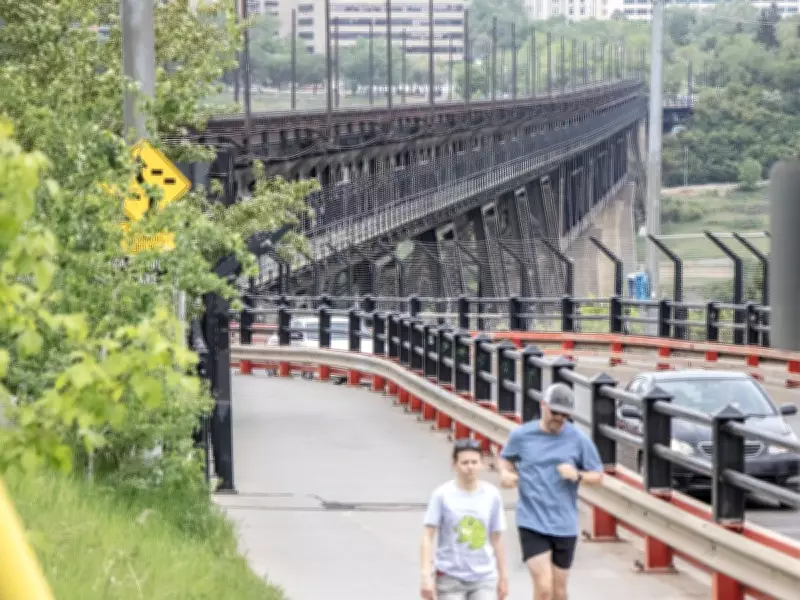
Neil Robson, also a structural engineer with DIALOG, noted that the bridge being bank to bank means it would need to be both longer than any other river crossing in the city and, as the name alludes, tall. To include driving lanes up to modern standards, it would also be much wider, even before considering additional lanes or other modes of transit. Currently, the High Level has two lanes, multi-use paths, and the historic High Level Bridge Streetcar. The original streetcar first operated over the High Level in 1913, and the bridge was used to carry trains on its upper deck until 1989.
“Logistics are significantly more challenging and more complicated with a bridge of this scale, size, length, and height above the river valley,” Robson said.
Weight of Rail Not a Major Concern
However, when it comes to the weight of a passenger rail line, Robson said it wouldn’t be much of a factor in terms of just load. The structural capacity can accommodate it, though design details remain to be worked out.