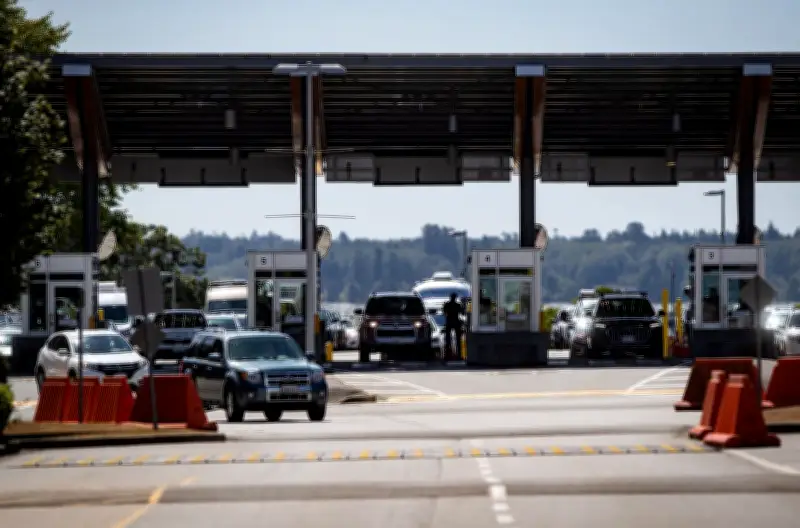
British Columbians are making more trips to Washington state this year, but the number of crossings has not yet returned to levels seen before the trade tensions that disrupted travel patterns, according to recent data.
Border crossings rise but remain below peak
Data from the Canada Border Services Agency shows that crossings from British Columbia into Washington state increased by 12% in the first half of 2026 compared to the same period in 2025. However, the total number of trips is still 18% lower than the pre-trade tension baseline recorded in 2023.
The increase is attributed to the easing of trade disputes and improved diplomatic relations between Canada and the United States, which had previously led to heightened scrutiny at border crossings and a decline in leisure travel.

Impact of trade tensions on travel
Trade tensions between the two countries, which escalated in 2024 and 2025, resulted in longer wait times at border crossings and a dip in consumer confidence among British Columbians who frequently shopped and vacationed in Washington state. The decline was particularly pronounced in border communities like Surrey and White Rock.
“We’re seeing a gradual recovery, but it’s not a full rebound yet,” said Jennifer Thompson, a spokesperson for the British Columbia Chamber of Commerce. “Many travelers are still cautious, and some have shifted their spending to local businesses.”
Economic implications for both sides
The reduced cross-border traffic has had economic consequences for Washington state retailers and tourism operators, who rely heavily on Canadian visitors. In 2023, British Columbians spent an estimated $2.3 billion in Washington state, a figure that dropped to $1.7 billion in 2025.
“We’re hopeful that the trend will continue upward as relations stabilize,” said Mark Larson, director of the Washington State Tourism Office. “Canadian visitors are a vital part of our economy, and we’re working to welcome them back.”
Future outlook
Analysts predict that if current diplomatic trends hold, cross-border travel could return to pre-tension levels by late 2027. However, factors such as exchange rates and fuel prices could influence the pace of recovery.