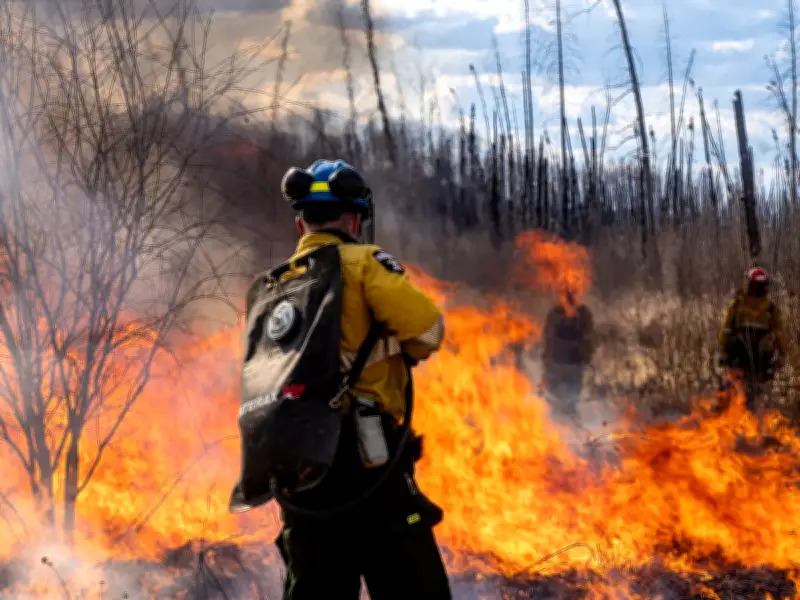
The Senate of Canada's recent report, "Canada on Fire," recommends creating a federal co-ordinating office for wildfires and emergency response. However, Canada already possesses a highly successful national wildfire co-ordination system through the Canadian Interagency Forest Fire Centre (CIFFC), incorporated in 1982 as a not-for-profit. CIFFC enables provinces, territories, and national parks to share firefighters, aircraft, and equipment across jurisdictions during emergencies.
CIFFC's Proven Track Record
Over four decades, CIFFC has built one of the world's most effective wildfire co-ordination models, based on trusted relationships rather than federal command-and-control bureaucracy. According to Kim G. Connors, writing in the Financial Post, "Countries look to Canada to understand how multiple levels of government, agencies and jurisdictions can collaborate through trusted relationships." Since 1982, CIFFC has co-ordinated more than 32,500 personnel deployments, 66,500 equipment movements, and 175 aviation assignments, while establishing national standards from firefighter fitness to international exchanges.
Existing Capacity vs. New Bureaucracy
The Senate report calls for stronger collaboration, improved aviation co-ordination, national standards, greater Indigenous leadership, increased technology adoption, and enhanced resilience—goals CIFFC already pursues. CIFFC co-ordinates national programs including Incident Command System (ICS) Canada, FireSmart Canada, training, standards development, information sharing, prevention initiatives, and technology collaboration. With Nunavut joining this year, CIFFC now represents every province and territory and supports over 15 national committees and working groups.

Field-Vetted Success
Connors argues that creating a new federal agency risks duplicating existing capacity and adding bureaucracy to a system that works through trust and collaboration. When the federal government launched a Pan-Canadian aerial firefighting initiative in 2025, CIFFC was tasked with securing four nationally co-ordinated aircraft—it delivered 12. This demonstrates the system's ability to exceed expectations without a new federal office.