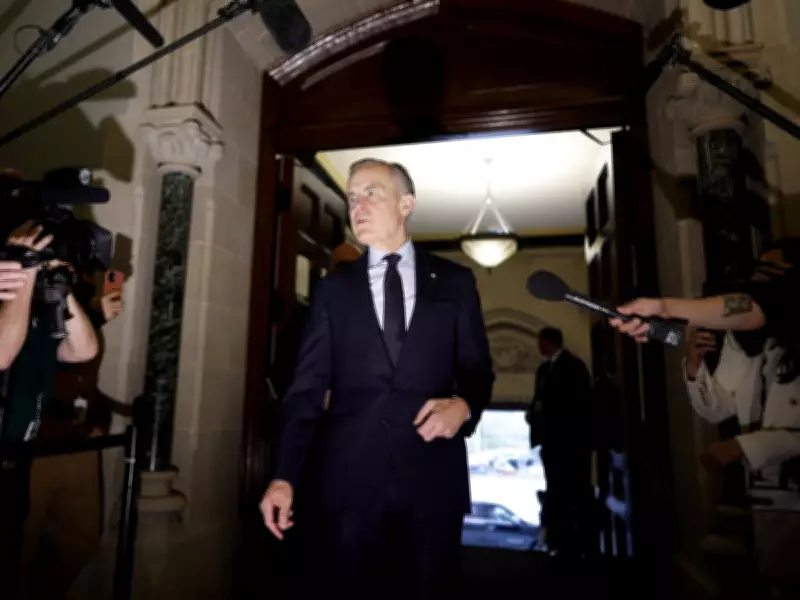
Prime Minister Mark Carney admitted on Wednesday that Canada's auto sector is facing significant challenges, following a report that Honda is pulling out of a planned $15-billion electric vehicle plant in Alliston, Ontario. The facility, which was set to begin production in 2028 with an annual capacity of 240,000 EVs, has been scrapped due to declining demand for electric vehicles in the United States and a strategic pivot by the Japanese automaker toward hybrid models.
Carney Responds to Honda's Decision
Speaking before a caucus meeting on Parliament Hill, Carney acknowledged the difficulties posed by U.S. tariffs on Canadian autos. "Obviously there are challenges with the U.S. tariffs, unjustified tariffs in the auto sector," he said. "We continue to work with companies in the sector, helping them reposition, reinvest, and supporting workers there. We'll continue to do what's necessary, including getting the right deal that's in Canada's interest."
Impact of U.S. Tariffs
The competitiveness of Canada's auto sector has been strained by recent U.S. trade actions. Under the Canada-United-States-Mexico Agreement (CUSMA), the industry is heavily integrated with the U.S., but tariffs on Canadian autos, aluminum, steel, and copper have created uncertainty. Last month, former U.S. President Donald Trump announced changes to metal tariffs, applying a 25% levy on the entire product rather than just the metal content, further pressuring Canadian exporters.

Government Response
In response to the metal tariffs, Industry Minister Melanie Joly announced $1.5 billion in funding this week to support affected industries. Carney noted last month that any renegotiation of CUSMA "will take some time." The federal government also unveiled an auto strategy in February, including an EV incentives program aimed at strengthening the domestic consumer market. However, the Honda pullout highlights ongoing challenges.
Honda's Shift in Strategy
Nikkei Asia reported on Tuesday that Honda decided to abandon the Ontario plant due to waning EV demand in the U.S. and a strategic shift toward hybrid vehicles. Last May, Honda had already delayed the project, citing the need to reassess market trends. The plant was expected to produce up to 240,000 EVs annually and represented a major investment in Canada's green auto sector.
Carney is scheduled to make an announcement in Mirabel, Quebec, related to the aerospace industry later today at 2:30 p.m. ET. More details are expected to follow.