Federal Government Commits $84 Million to Expand EV Charging Network
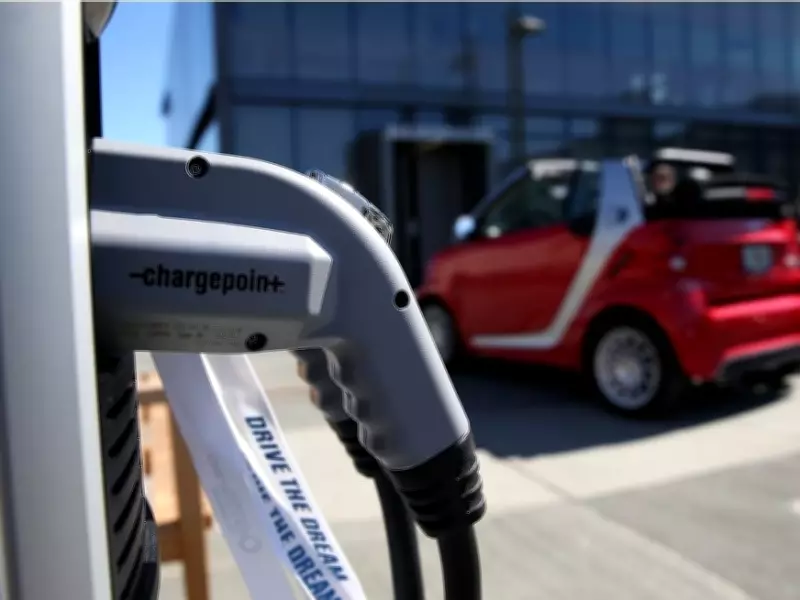
In a significant move to bolster Canada's electric vehicle infrastructure, the federal government has announced plans to invest over $84 million to install 8,000 new EV charging ports across the country. This initiative, revealed by Energy Minister Tim Hodson on Tuesday, aims to complement the existing network of approximately 30,000 chargers already operational nationwide.
Addressing Infrastructure Gaps and Regional Disparities
The announcement comes at a critical time, as recent data indicates a slowdown in charging infrastructure deployment. According to an analysis commissioned by Natural Resources Canada and conducted by Dunsky Energy and Climate, the rollout of charging ports decelerated in 2025, with only 6,170 new installations compared to over 7,000 in both 2023 and 2024. The report estimated that Canada would require around 52,000 chargers by the end of last year to meet growing demand.
Regional distribution of current charging infrastructure shows notable concentrations, with Ontario and Quebec accounting for 67% of all charging ports in Canada. British Columbia follows with 25%, while Alberta holds 5% of the national total. The new funding is expected to help address these geographical imbalances and support broader adoption of electric vehicles.

Broader Context of Federal EV Strategy
This $84 million investment forms part of a larger federal commitment to electric vehicle infrastructure. Last week, Prime Minister Mark Carney announced a comprehensive $1.5 billion allocation toward EV infrastructure as part of a revised federal auto strategy. The government has also reintroduced an EV rebate program, offering Canadians up to $5,000 for eligible electric vehicles and $2,500 for plug-in hybrids, with these incentives gradually decreasing annually until 2030.
In a parallel development, the government has shifted away from an EV sales mandate, opting instead for stricter emission standards for the automotive sector. Additional funding includes $5.7 million to assist companies in transitioning their vehicle fleets to more fuel-efficient options and $7.2 million for public education initiatives about electric vehicles and clean fuels.
Implementation Timeline and Future Outlook
While the government has confirmed the financial commitment, specific details regarding the installation timeline for the 8,000 new charging ports remain undisclosed. The lack of a clear schedule raises questions about how quickly these additions will materialize and whether they will sufficiently accelerate the pace of infrastructure development to meet projected needs.
This expansion of charging infrastructure represents a crucial step in supporting Canada's transition to cleaner transportation options, particularly as consumer interest in electric vehicles continues to grow. The success of this initiative will depend not only on the deployment of new charging stations but also on their strategic placement to maximize accessibility and convenience for EV users across diverse regions.