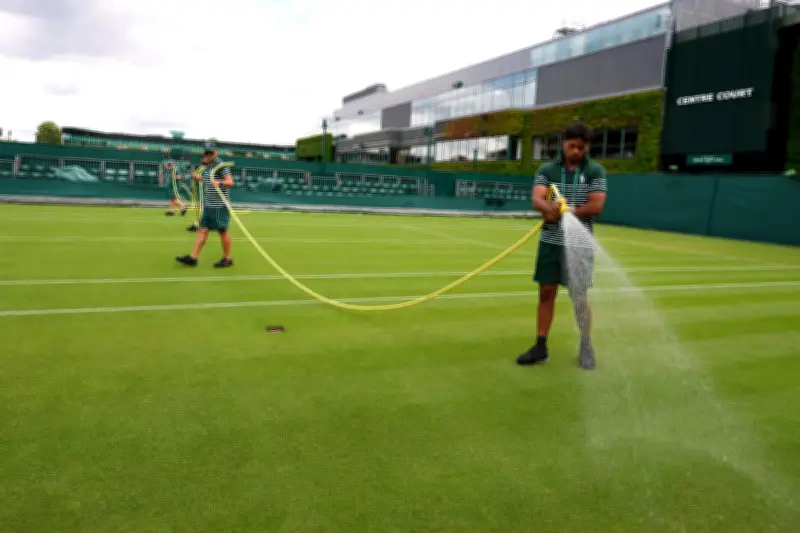
Wimbledon's iconic grass courts stayed lush and green as other lawns across London turned brown during a record-breaking heatwave in late June 2026. Ground staff worked tirelessly to water and maintain the courts ahead of the Wimbledon Tennis Championships, which began on Monday, June 29.
Record Heat and Watering Efforts
Temperatures in London soared to unprecedented levels, with the mercury hitting 38°C (100°F) on several days. The extreme heat caused widespread browning of grass in parks and gardens across the city. However, at the All England Lawn Tennis and Croquet Club, a dedicated team of ground staff ensured the courts remained in pristine condition. They used specialized irrigation systems and applied water throughout the day and night, according to club officials.
“We have a team of 12 groundskeepers working around the clock to keep the courts green and playable,” said Neil Stubley, head of courts and horticulture at Wimbledon. “It’s a challenge, but we have the resources and experience to handle it.”

Impact on Players and Matches
The heat also affected players, with several requiring medical attention during matches. The tournament implemented extreme heat protocols, including allowing additional breaks and providing cooling stations. Despite the conditions, play continued without major disruptions. “It’s tough out there, but the courts are in great shape,” said defending champion Carlos Alcaraz after his first-round win.
Broader Context of Climate Change
The heatwave is part of a broader trend of rising temperatures linked to climate change. According to the UK Met Office, June 2026 was the hottest on record for England, with average temperatures 3.5°C above the long-term mean. Climate scientists warn that such extreme events will become more frequent. “This is a clear signal of climate change,” said Dr. Emily Wallace, a climate scientist at the Met Office. “We need to adapt our infrastructure, including sports venues, to cope with these new conditions.”
Wimbledon has already taken steps to address climate change, including installing solar panels and using electric vehicles. The club also plans to reduce water usage by investing in more efficient irrigation systems. “We are committed to sustainability while maintaining the highest standards for the tournament,” said Sally Bolton, chief executive of the All England Club.