Communities surrounding Kenya's iconic Rift Valley lakes are facing a deepening crisis as water levels surge, swallowing homes, farms, and livelihoods. Scientists are now piecing together the complex puzzle behind this environmental disaster, which has left thousands of residents facing an uncertain and displaced future.
The Immediate Impact: Flooded Homes and Displaced Lives
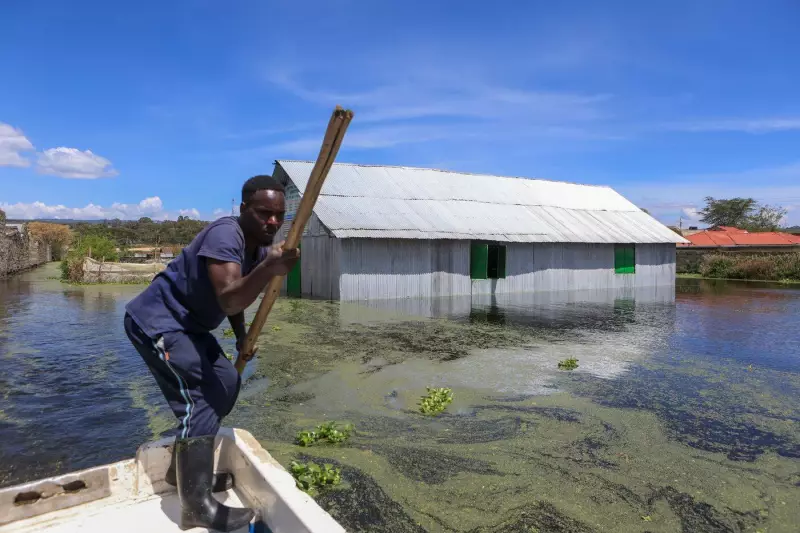
The human cost of the rising waters is stark and immediate. In Kihoto Village, near Lake Naivasha, the scene is one of profound disruption. Hundreds have been forced from their homes as the lake swelled beyond its historical boundaries, inundating buildings and infrastructure. A poignant image from November 11, 2025, captures a man paddling a boat past the flooded remnants of homes, a sobering testament to the scale of the encroachment. This is not an isolated incident but part of a broader pattern affecting multiple lakes across the region, upending lives and local economies.
Unraveling the Scientific Causes
Researchers point to a confluence of factors driving the unprecedented rise in lake levels. While increased rainfall is a significant contributor, it is not the sole culprit. Scientific analysis and data point to a more intricate web of causes. These include intensified rainfall patterns linked to broader climatic shifts, which have delivered more water to the lake basins than the region can absorb or drain.

Furthermore, environmental changes in the surrounding watersheds, such as land-use changes and sedimentation, are altering how water flows into the lakes. Some studies also suggest that tectonic activity, ever-present in the geologically active Rift Valley, may be influencing underground water flows and basin structures, contributing to the phenomenon. It is the synergy of these elements—climate, landscape, and geology—that has created the perfect conditions for the lakes to expand aggressively.
An Uncertain Future for Displaced Communities
The long-term outlook for the displaced thousands remains fraught with uncertainty. With homes and farmland submerged, the path to recovery is unclear. The flooding represents both a sudden humanitarian emergency and a slow-moving environmental catastrophe. Communities are grappling with immediate needs for shelter and food while also confronting the daunting possibility that their former lands may be lost to the waters permanently.
This situation forces difficult questions about relocation, adaptation, and resilience. The crisis in Kenya's Rift Valley serves as a potent case study in how interconnected environmental factors can converge to create a direct threat to human settlement. It underscores the urgent need for sustainable water management and climate adaptation strategies in vulnerable regions worldwide, as the data from Kenya provides a warning signal that scientists hope will inform future policy and planning.