Trump Administration Moves to Rescind Foundational Climate Regulation Policy
The Trump administration announced on Thursday that it will formally revoke a pivotal scientific determination that has served as the legal foundation for United States efforts to regulate greenhouse gas emissions and address climate change for over a decade. This action represents a significant shift in federal environmental policy, directly challenging established regulatory frameworks.
Ending the Endangerment Finding: A Major Policy Reversal
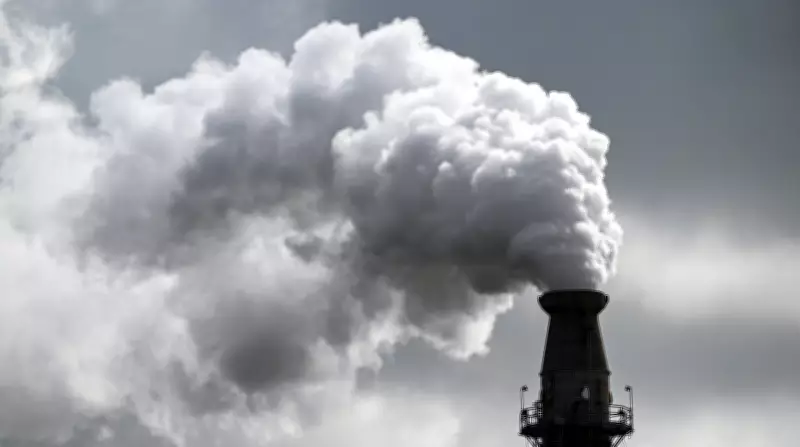
The Environmental Protection Agency will issue a final rule that rescinds the 2009 government declaration known as the endangerment finding. This Obama-era policy established that carbon dioxide and other greenhouse gases pose a serious threat to public health and welfare, creating the legal basis for nearly all climate regulations under the Clean Air Act.
President Donald Trump and EPA Administrator Lee Zeldin will officially formalize the rescission during a White House ceremony, according to White House press secretary Karoline Leavitt. She described the move as "the largest deregulatory action in American history," claiming it will save American taxpayers approximately $1.3 trillion in regulatory costs.

The majority of these projected savings would come from reduced expenses for new vehicles, with the EPA estimating average savings exceeding $2,400 per vehicle for popular light-duty cars, SUVs, and trucks. This calculation reflects the administration's focus on economic considerations in environmental policy decisions.
Legal and Scientific Foundations Under Scrutiny
The endangerment finding has served as the legal underpinning for regulations targeting motor vehicles, power plants, and various pollution sources that contribute to planetary warming. These regulations include auto emissions standards designed to mitigate increasingly severe climate impacts such as deadly floods, extreme heat waves, catastrophic wildfires, and other natural disasters affecting communities across the United States and globally.
Legal challenges are certain to follow this regulatory reversal, with environmental organizations already preparing court battles. Abigail Dillen, president of the nonprofit law firm Earthjustice, characterized the administration's action as "the single biggest attack in U.S. history on federal efforts to address climate change."
"The Trump administration is abandoning its core responsibility to keep us safe from extreme weather and accelerating climate change," Dillen stated. "There is no way to reconcile EPA's decision with the law, the science and the reality of disasters that are hitting us harder every year."
Administration Defends Economic Focus Amid Scientific Consensus
EPA press secretary Brigit Hirsch defended the decision, calling the Obama-era rule "one of the most damaging decisions in modern history" and emphasizing that the EPA "is actively working to deliver a historic action for the American people."
Administrator Zeldin, a former Republican congressman appointed by Trump last year, has consistently criticized previous Democratic administrations for what he views as economically damaging climate policies. "Democrats created this endangerment finding and then they are able to put all these regulations on vehicles, on airplanes, on stationary sources, to basically regulate out of existence ... segments of our economy," Zeldin explained when announcing the proposed rule last July.
However, critics point to substantial scientific evidence supporting the original finding. Following Zeldin's proposal to repeal the rule, the National Academies of Sciences, Engineering, and Medicine conducted a comprehensive reassessment and concluded that the 2009 finding remained "accurate, has stood the test of time, and is now reinforced by even stronger evidence."
Legal Precedents and Future Challenges
Legal experts note that the Supreme Court ruled in the 2007 Massachusetts v. EPA case that planet-warming greenhouse gases qualify as air pollutants under the Clean Air Act. Since that landmark decision, courts have consistently rejected legal challenges to the endangerment finding, including a 2023 ruling by the U.S. Court of Appeals for the District of Columbia Circuit.

Peter Zalzal, a lawyer and associate vice president of the Environmental Defense Fund, argued that the EPA's action will lead to increased climate pollution, higher health insurance and fuel costs, and thousands of avoidable premature deaths. "Zeldin's push is cynical and deeply damaging, given the mountain of scientific evidence supporting the finding, the devastating climate harms Americans are experiencing right now and EPA's clear obligation to protect Americans' health and welfare," he countered.
The scientific panel from the National Academies emphasized in a September report that much of the understanding of climate change that was uncertain in 2009 has now been resolved. "The evidence for current and future harm to human health and welfare created by human-caused greenhouse gases is beyond scientific dispute," the panel concluded, highlighting the growing consensus within the scientific community.