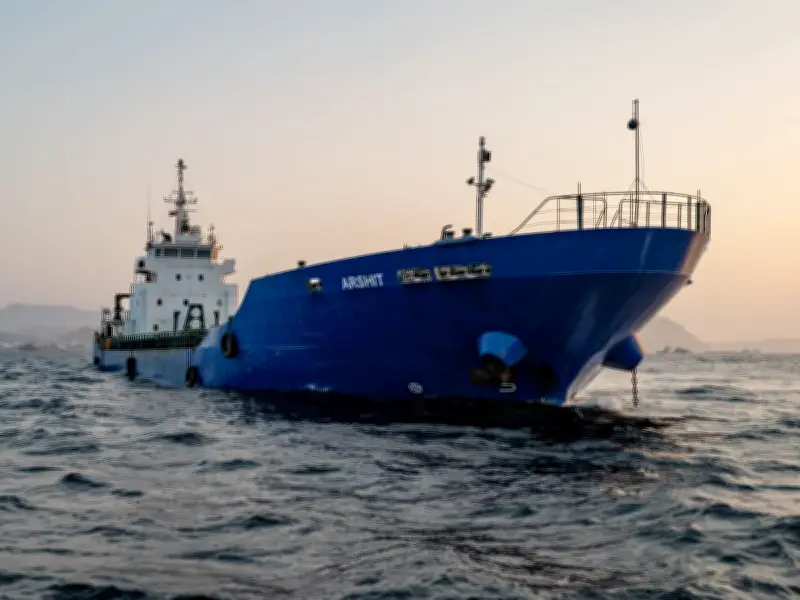
At anchor in the Persian Gulf, Captain Abhijit Chopra learned of the United States-Iran peace deal when his phone lit up with messages from family and friends. But the captain of a crude oil tanker tempered his excitement: there were no signs of celebration from nearby vessels, and no ships making haste toward the Strait of Hormuz.
Thousands of Seafarers Trapped Since February
Chopra and his 21-strong crew have been trapped since the war began in late February 2026. Initially, they struggled with fear and uncertainty, which ebbed into boredom and a constant battle to keep negative thoughts at bay. For more than 120 days they have waited, dining together and bonding by singing old Hindi songs at karaoke. In early March, Chopra and his crew—all Indian except for one Ukrainian—celebrated Holi, a major Hindu festival, onboard the tanker, painting each other's foreheads with turmeric powder from their kitchen.
Around 8,000 seafarers who are not from the region remain stranded in the gulf, according to the International Maritime Organization (IMO), the United Nations agency that regulates and coordinates global shipping. These sailors have been left to the mercy of geopolitical forces and distant diplomatic negotiations, working to keep their ships in service as missiles and drones passed overhead.

Geopolitical Chess Game Determines Fate
Whether seafarers can sail out safely through Hormuz depends on the value of the cargo aboard their ship, the shipowner's willingness to risk the vessel, and their ability to secure insurance. Signs that the strait might reopen came and went. Chopra said, "When they said the Strait of Hormuz was open, we were a bit optimistic that the vessel might transit." But when fresh news of attacks on tankers emerged, they realized they would be stuck longer. "There was a little bit of disappointment," he added.
Their fate underscores the global economy's heavy dependence on individuals who must go to extraordinary lengths and face incredible risks to keep trade flowing. "Ultimately, we are just ordinary people. We are fathers, we are sons, we are husbands who are staying for months out at sea carrying out a duty," Chopra said. "And we are doing this because somebody has to do this and the world's goods, economies depend on all this seafaring job."
Global Shipping's Human Cost
Oceangoing ships move more than 80% of global goods, or about 70% in total value, according to a World Bank estimate. Nearly 2.6 million seafarers serve onboard the world's fleet of more than 85,000 merchant vessels, as per a joint report by BIMCO, a shipping industry trade association, and the International Chamber of Shipping. The majority are recruited from lower-income countries, often in Asia, with the Philippines and India providing around 30% of the global workforce.
Working on ships can be difficult and dangerous, with crews often away from home for months. Seafarers' conditions at sea are largely governed by the Maritime Labour Convention, an International Labour Organization treaty that outlines work and welfare rights, including protections in extraordinary scenarios. However, enforcement and compliance are patchy in the decentralized shipping industry. Large shipowners are often compliant, but seafarers on vessels owned by smaller companies may not receive even those basic rights, top executives at support groups told Bloomberg News.