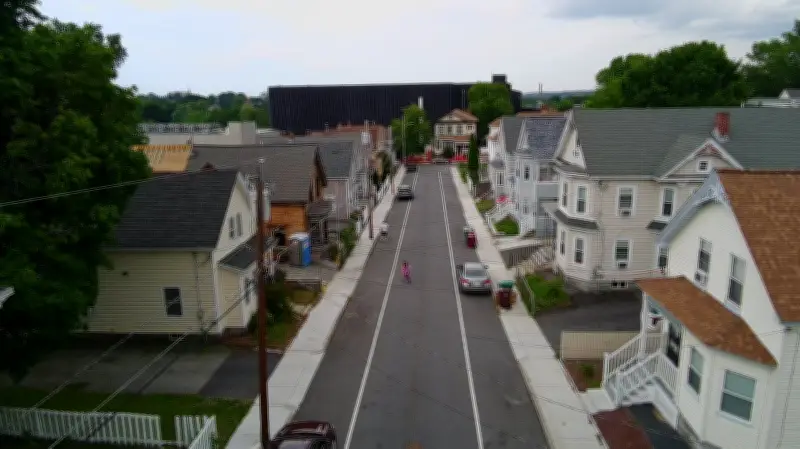
A data centre built by the Markley Group looms over a residential neighbourhood in Lowell, Massachusetts, as recorded on June 30, 2026. The facility illustrates the mounting pressure that extreme heat places on data centre infrastructure, fuelling discussions about the environmental costs of artificial intelligence.
Heat waves compound data centre challenges
As temperatures rise across North America, data centres require more energy for cooling, leading to higher operational costs and increased strain on local power grids. In Lowell, the Markley Group's facility has drawn attention from residents concerned about noise, water usage, and electricity consumption. The Associated Press reported that the building's presence has become a local symbol of the trade-offs between technological progress and community impact.
Data centres already consume about 1-2% of global electricity, a figure expected to grow with AI expansion. Cooling systems account for up to 40% of a data centre's energy use, according to industry estimates. During heat waves, this demand spikes, sometimes forcing operators to throttle computing loads or rely on backup generators.

AI debates intensify over resource use
The strain on resources has amplified debates among policymakers, tech executives, and environmental advocates. Critics argue that AI's benefits must be weighed against its carbon footprint and water consumption. Proponents counter that AI can optimise energy grids and accelerate climate solutions. The Markley Group did not respond to requests for comment.
In Massachusetts, state legislators have proposed bills to regulate data centre water usage and require renewable energy sourcing. Similar measures are under consideration in Virginia, Oregon, and other states with high data centre concentrations. Industry groups warn that overly strict regulations could stifle innovation and drive jobs overseas.
Local impacts and community response
Lowell residents have reported increased traffic and noise from the Markley facility, as well as concerns about the visual impact on the historic mill city. The data centre occupies a former factory site, a common pattern in older industrial cities. Community meetings have drawn dozens of attendees, with some calling for a moratorium on new data centre construction until environmental reviews are completed.
According to the city planning office, data centres have contributed to a 15% rise in commercial property tax revenue since 2023, but also to a 20% increase in peak electricity demand. The tension between economic benefits and quality-of-life concerns mirrors debates in other regions.
Broader implications for AI policy
The situation in Lowell reflects a global challenge. In Europe, the EU's Energy Efficiency Directive now includes data centres in mandatory reporting requirements. In Asia, Singapore paused new data centre builds from 2019 to 2022 to manage resource constraints. The International Energy Agency projects that data centre electricity consumption could double by 2030, driven largely by AI workloads.
“We need to have an honest conversation about what we’re willing to trade for AI progress,” said Dr. Emily Tran, a researcher at the Massachusetts Institute of Technology studying sustainable computing. “Every kilowatt-hour used by a data centre is a kilowatt-hour not available for homes or hospitals.”
Looking ahead
As heat waves become more frequent and intense due to climate change, data centre operators are investing in liquid cooling, immersion cooling, and location strategies that favour cooler climates. Some are exploring underwater or underground facilities. However, these solutions remain costly and unproven at scale.
The Markley Group's Lowell data centre will soon undergo a retrofit to improve efficiency, according to documents filed with the city. The company plans to install a 10-megawatt battery storage system to reduce grid strain during peak heat hours. Whether such measures will satisfy critics remains to be seen.