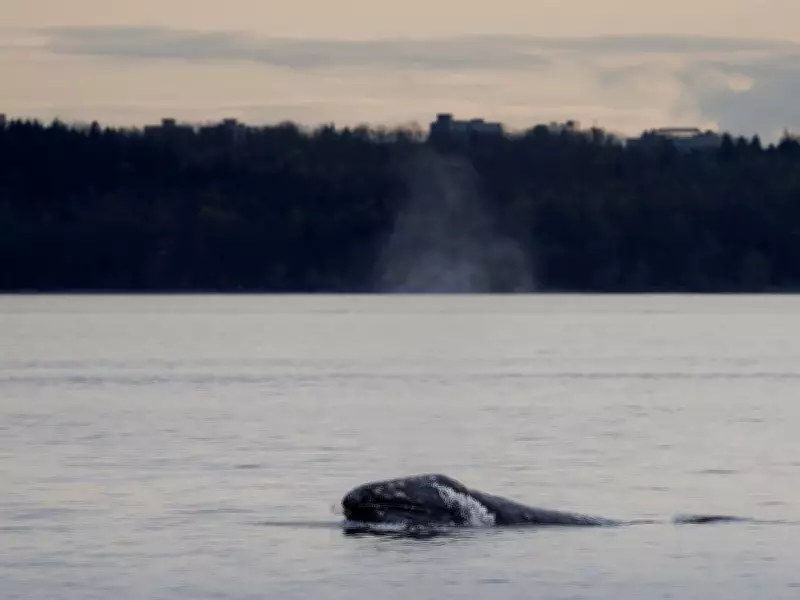
Scientists have linked a disturbing number of emaciated grey whale deaths off the coasts of British Columbia and Washington state to warming ocean temperatures, which are killing off the whales' food supply in the Arctic. This is among the latest climate and environmental news for the week of April 20 to April 26, 2026.
Metro Vancouver plans to combat climate risks
Metro Vancouver has announced plans to increase water storage and add filtration systems to combat climate risks, including droughts and extreme weather events. The region aims to bolster its resilience against the impacts of climate change.
Cheap batteries take over world's power grids
Affordable battery technology is rapidly transforming global power grids, enabling greater integration of renewable energy sources and reducing reliance on fossil fuels. This shift is a key step toward decarbonizing the energy sector.

Climate change context
Human activities, particularly burning fossil fuels and livestock farming, are the main drivers of climate change, according to the UN's Intergovernmental Panel on Climate Change. These activities increase heat-trapping greenhouse gas levels in the atmosphere, raising global surface and ocean temperatures.
The panel, including scientists from B.C., has long warned that wildfires and severe weather—such as the deadly heat dome and catastrophic flooding in 2021—will become more frequent and intense due to the climate emergency. It has issued a code red for humanity, warning that the window to limit warming to 1.5°C above pre-industrial levels is closing.
According to NASA, human activities have raised atmospheric carbon dioxide content by 50% in less than 200 years, with unequivocal evidence that Earth is warming at an unprecedented rate. As of March 5, 2026, CO₂ levels reached 429.35 parts per million, up from 428.62 ppm the previous month, as measured at the Mauna Loa Observatory in Hawaii.
Key facts
- The global average temperature in 2023 was 1.48°C higher than pre-industrial levels; in 2024, it breached the 1.5°C threshold at 1.55°C.
- 2025 was the third warmest year on record, capping the 11th consecutive warmest years.
- Human activities have raised atmospheric CO₂ by nearly 49% above pre-industrial levels since 1850.
- The world is not on track to meet the Paris Agreement target of limiting warming to 1.5°C.
- UNEP's 2025 Emissions Gap Report indicates that even if emissions targets are met, global temperatures could rise by 2.3°C to 2.5°C this century.
- In June 2025, global CO₂ concentrations exceeded 430 parts per million, a record high.
There is global scientific consensus that the climate is warming and that human activities are the primary cause.