Richmond Pilot Project Harnesses Fraser River Sediment to Combat Climate Change Flooding
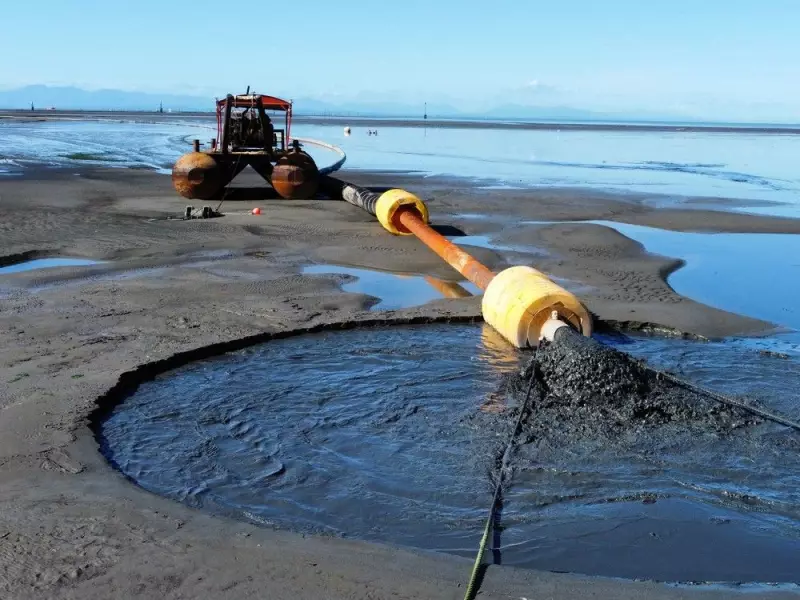
A groundbreaking pilot project based in Richmond, British Columbia, is turning to nature for solutions to one of climate change's most pressing threats: coastal flooding. The innovative initiative, spearheaded by Ducks Unlimited Canada in collaboration with engineers from the University of British Columbia, focuses on utilizing sediment from the Fraser River to restore eroding tidal marshes that once served as natural buffers against storm surges and rising sea levels.
Rebuilding Natural Defenses Against Rising Waters
The project represents a significant shift toward nature-based solutions for coastal protection. Researchers have employed heavy equipment and extensive piping systems to strategically place 5,800 cubic metres of river sediment on Sturgeon Bank, located just off Richmond's coastline. To date, the team has successfully repurposed more than 27,000 cubic metres of sediment that would otherwise have been discarded into the ocean through standard dredging operations.
This sediment augmentation aims to counteract the dramatic loss of tidal marshes in the region. Historical dredging activities, while necessary for maintaining navigable waterways for ships, have disrupted the natural sediment flow, resulting in the disappearance of approximately 65 hectares of marshes in this specific area alone. These marshes play a crucial dual role: they act as vital habitats for migratory birds, raptors, and juvenile salmon while simultaneously providing essential flood protection for nearby communities.

Addressing the Coastal Squeeze Phenomenon
Dr. Enda Murphy, an assistant professor in coastal engineering at UBC, explains the critical challenge facing coastal areas like Richmond. "As sea levels rise, the marshes get squeezed by the dikes, what we call a coastal squeeze," Murphy states. "There is an increasing awareness that we need nature-based solutions to reverse this problem."
Climate projections paint a concerning picture for British Columbia's coastline. Experts anticipate sea-level rises of at least one metre by 2100 and potentially two metres by 2200 due to ongoing climate change. This pilot project could serve as a valuable model for other coastal communities throughout British Columbia that are preparing for these inevitable environmental changes.
Strategic Sediment Management for Long-Term Protection
Eric Balke, a senior restoration biologist and Fraser River estuary program manager with Ducks Unlimited Canada, emphasizes the strategic nature of their sediment placement. "Engineers aren't dumping enough sediment to harm habitat," Balke clarifies, noting that studies have revealed an average annual sediment deficit of 525,000 cubic metres on the banks of the Fraser River. The project's 27,000 cubic metres represents just a fraction of this deficit.
"There is a massive annual deficit, and it is a gigantic area," Balke observes. "If you look at some of those drone shots, you can see that the two sediment mounds we created are just a drop in the bucket."
Integrating Nature with Traditional Infrastructure
Researchers stress that sediment augmentation represents only one component of a comprehensive coastal protection strategy. "We are not saying get rid of dikes," Balke explains. "Dikes are an integral part of our coastal flood defences. What we are advocating for is an integration of nature, incorporating it into our coastal flood defences."
This integrated approach recognizes that traditional infrastructure alone may prove insufficient against the escalating threats posed by climate change. "To be frank, if we do nothing for these tidal marshes outside of the dike, then it's anticipated that sea level rise will essentially drown out the marsh over the coming decades," Balke warns. "So if we do nothing, we risk losing more of these tidal marshes, which makes Richmond even more vulnerable to coastal flooding."

Future Implications and Scaling Potential
The research team is currently analyzing collected data and preparing a comprehensive final report expected to be released next year. Looking ahead, the project's longer-term ambition involves scaling up operations to encompass Richmond's entire west coast, establishing regular sediment deposit protocols that benefit both natural ecosystems and human communities.
This innovative approach to sediment management—repurposing material that would typically be treated as waste—demonstrates how creative engineering and ecological restoration can work in tandem to address complex environmental challenges. As coastal communities worldwide grapple with the realities of climate change, the Richmond pilot project offers valuable insights into sustainable, nature-based adaptation strategies that protect both human settlements and vital ecosystems.