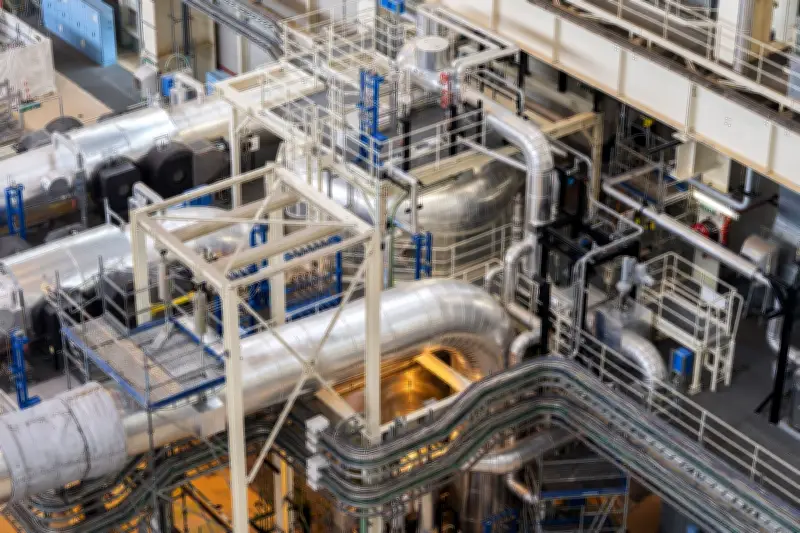
France's ongoing heatwave has forced Electricite de France SA (EDF) to shut down several nuclear reactors as cooling water temperatures exceed safe limits, the company confirmed on July 12, 2026. The measure affects reactors along the Rhône and Garonne rivers, where water used for cooling has become too warm to comply with environmental regulations.
Reactors Affected and Regulatory Compliance
EDF announced that at least four reactors have been taken offline, including units at the Bugey, Saint-Alban, and Golfech nuclear plants. The shutdowns are mandated by French nuclear safety rules that restrict reactor operation when river water temperatures rise above a certain threshold, typically around 28°C (82.4°F), to prevent thermal pollution and protect aquatic life. The heatwave, which began in late June, has pushed temperatures above 40°C (104°F) in many regions, with river water temperatures reaching record highs.
According to EDF spokesperson Marie Dupont, "The safety of our plants and the environment is our top priority. We are closely monitoring the situation and will restart reactors as soon as conditions allow." The company estimates that the shutdowns could reduce France's nuclear output by up to 3 gigawatts, roughly 5% of its total nuclear capacity.

Impact on Energy Grid and Neighboring Countries
The reduced nuclear output has put pressure on France's electricity grid, which typically relies on nuclear power for about 70% of its electricity. To compensate, EDF has increased imports from neighboring countries, including Germany and Spain, and has ramped up production at its hydroelectric and gas-fired plants. The French grid operator RTE warned that the situation could lead to price spikes if the heatwave persists.
The shutdowns also affect exports, as France is a major electricity exporter to the UK, Italy, and Switzerland. The UK's National Grid has reported increased demand on interconnectors, but no immediate supply disruptions are expected.
Broader Context of Heatwaves and Nuclear Power
This is not the first time a heatwave has forced French nuclear shutdowns. Similar events occurred in 2003, 2015, 2018, 2019, and 2022, raising concerns about the vulnerability of nuclear power to climate change. As global temperatures rise, such events are expected to become more frequent, prompting discussions about adapting cooling systems or increasing reliance on other energy sources.
Environmental groups have called for accelerated investment in renewable energy and grid storage to reduce dependence on nuclear power during heatwaves. However, the French government has reaffirmed its commitment to nuclear energy as part of its net-zero emissions strategy, with plans to build new reactors by 2035.