Despite experiencing a winter of record extremes featuring historic snowstorms, deep freezes, and unseasonably mild periods, Canadians have shown a modest decline in overall disaster concerns. According to the annual Weather and Property survey conducted by First Onsite Property Restoration, worries about severe weather events including winter storms, flooding, and hurricanes have softened by five points or more compared to the previous year.
Insurance Losses Decline but Risks Remain Elevated
These findings come following a year where Canada witnessed a substantial reduction in insured losses, dropping from a record-breaking $9.4 billion in 2024 to $2.4 billion in 2025, as reported by Catastrophe Indices and Quantification Inc. (CatIQ). While this decrease might provide temporary relief, 2025 still ranked as the tenth costliest year on record for weather-related damages.
The most significant weather events of 2025 demonstrate that risks remain alarmingly high across the nation. These included the Ontario and Quebec ice storms, the Flin Flon and La Ronge wildfires, the Calgary hailstorm, severe storms across the Prairies, and British Columbia's series of atmospheric rivers.

Climate Change and Wildfire Smoke Dominate National Concerns
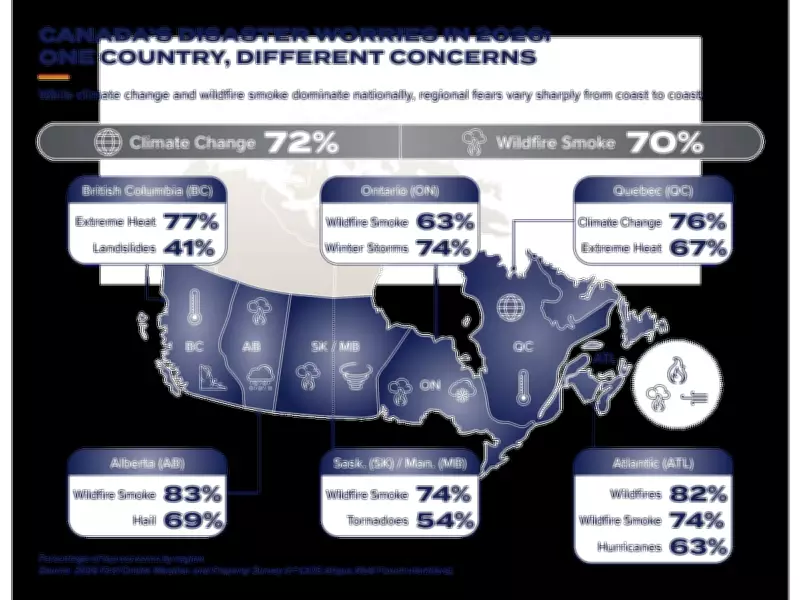
Although some weather-specific concerns have eased, two decades of intensifying weather events and substantial insured losses keep Canadians vigilant. Climate change continues to be a defining concern nationwide, with 72% of Canadians expressing worry about being personally affected by climate change impacts.
Furthermore, seven out of ten Canadians worry that climate change is already driving up the costs of their home or business insurance premiums. Wildfire smoke has emerged as another top-tier concern for both businesses and homeowners across the country, with 70% reporting significant apprehension about this environmental hazard.
Regional Awareness Replaces Desensitization
Canadians are not becoming desensitized to disasters but rather developing greater awareness of climate-related impacts specific to their regions. According to Jim Mandeville, senior vice president of large loss North America at First Onsite Property Restoration, clearer regional differences have emerged in the survey's eighth year.
"Canadians are now laser-focused on the specific regional risks that have and will continue to impact their homes and businesses the most," Mandeville explained. "This makes the conversation around climate change and property damage more personal than ever before."
Regional Breakdown of Weather Concerns
When examining provincial and regional trends, British Columbia reported the highest level of concern in the country regarding extreme heat and heat domes at 77%. The province also showed elevated worries about landslides and mudslides (41%) as well as severe rainfall and flooding (70%).
These concerns hold particular significance as the five-year anniversary approaches of the devastating 2021 summer heat dome and wildfires, followed by November's atmospheric river and Pacific Northwest floods that same year, events that severely impacted British Columbia and the broader region.
The survey reveals that while national disaster concerns have moderated slightly, Canadians remain acutely aware of climate change impacts and wildfire smoke dangers. Regional variations in weather worries reflect localized experiences with extreme weather events, creating a nuanced landscape of environmental concerns across Canada's diverse provinces and territories.