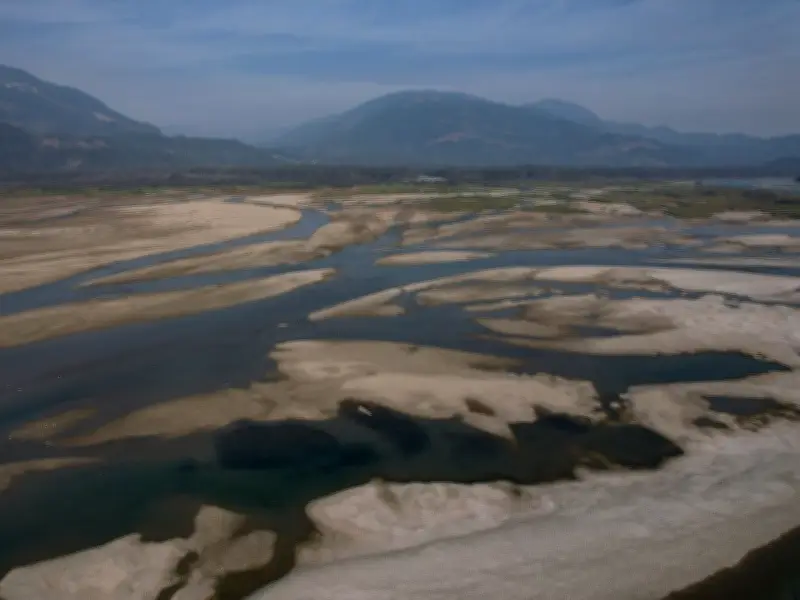
Before summer has even begun, much of British Columbia is running dry. Snowpack levels have collapsed to two per cent of normal in the Okanagan and zero on Vancouver Island. Rivers in these regions are flowing lower than ever for this time of year, and the forecast looks painfully short of the rain needed.
Local Governments Under Stress
Representing local governments in these areas, we understand the stress this causes residents and local businesses. Yet our communities are being asked to manage growing water risks without the authority, resources, or tools required to do so effectively. That must change.
B.C.’s economy is built on the assumption that clean, abundant water will always be available. That assumption no longer holds. Today, water insecurity is one of the most pressing challenges facing our province, with communities lurching from one water emergency to the next.

Emergencies on the Rise
For a growing number of municipalities, running out of water is no longer hypothetical. Last fall, years of drought pushed Dawson Creek’s water supplies to critical levels, forcing the city to declare a state of emergency and pursue costly emergency measures. The Sunshine Coast and the Village of McBride declared water emergencies in 2023 and 2024. And last month, the Syilx Okanagan Nation declared a watershed emergency across the Okanagan and neighbouring watersheds.
These are not isolated incidents. Water insecurity is now a fact of life in communities across B.C. Yet provincial support hasn’t kept pace with the risks. Local governments are expected to approve housing, support economic growth, prepare for emergencies, and safeguard drinking water, without the funding or governance tools required to manage water responsibly.
Fragmented Approach
Too often, key decisions affecting water availability are made upstream while downstream communities deal with the consequences. This fragmented approach is costly and unsustainable.
Fortunately, there are promising examples that point to a different approach. In the Koksilah and Nicola watersheds, First Nations, local governments, farmers, and community groups are collaborating with the province on long-term approaches to drought and water management. In the Okanagan, leaders from Syilx Nation communities, municipalities, and regional districts have created a collaborative leadership table to strengthen water stewardship. The District of Lake Country, Regional District of North Okanagan, and the Okanagan Indian Band have developed the North Aberdeen Plateau plan to protect critical drinking water sources.
Need for Provincial Action
These partnerships show that collaboration delivers practical solutions. But unlike other provinces, B.C. lacks a consistent provincial system and dedicated funding to support local watershed governance. That gap has real economic costs. Communities cannot plan infrastructure, agriculture, or industrial development without confidence in long-term water security. Stronger water governance is sound economic strategy.
B.C. charges some of the lowest industrial water rates in Canada – just $2.25 per million litres. The Union of B.C. Municipalities has called on the province to modernize those rates and reinvest the revenue into local watershed solutions. Provincial leadership is urgently needed to ensure water security for all.