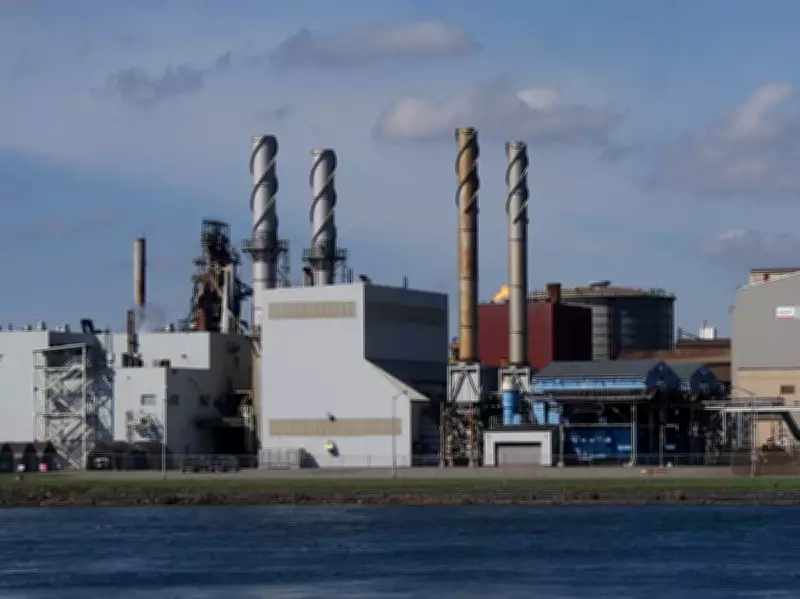
Algoma Steel Inc., headquartered in Sault Ste. Marie, Ontario, experienced a significant reduction in carbon emissions during the first quarter of this year after shutting down its coal-fired blast furnace. However, the company faced a substantial increase in carbon tax payments during the same period.
Carbon Tax Payments Rise Despite Emission Cuts
In the first three months of the year, Algoma reported paying $6 million in carbon taxes to Ontario, marking a 71 percent increase compared to the $3.5 million it paid in the same quarter last year. This rise occurred even as the company completed a $987 million transition to electric arc furnaces, a move expected to cut annual carbon emissions by up to 70 percent.
Flaws in Ontario's Carbon Pricing System
According to the Clean Prosperity Institute, a non-profit organization advocating for market-based climate solutions, the increase stems from inherent flaws in Ontario's carbon pricing system. Chloe McEhlone, a research manager at the institute, noted that Algoma's large investments have not generated any carbon credits. She explained that the system's intensity-based benchmark, which sets emissions limits per unit of production rather than total emissions, has shifted against Algoma after its switch to electric arc furnaces.

Algoma paid $8 million in carbon tax in the fourth quarter of 2025, down 11 percent from the same quarter a year earlier. For the full year 2025, total carbon tax payments reached $31.4 million, up from $31 million in 2024, despite the ramp-up of its electric arc furnace.
Rebate Program and Missed Opportunities
McEhlone pointed out that while Algoma may recoup some costs through a carbon tax rebate program for emission-reducing investments, the company should ideally be generating carbon credits to sell to other industrial emitters. This would create a financial incentive for further emission reductions. However, Ontario switched Algoma's benchmark to electric production standards after the furnace transition, effectively raising the bar. The Clean Prosperity Institute described this as "moving the goal posts", holding Algoma to a higher standard without rewarding its prior investments.