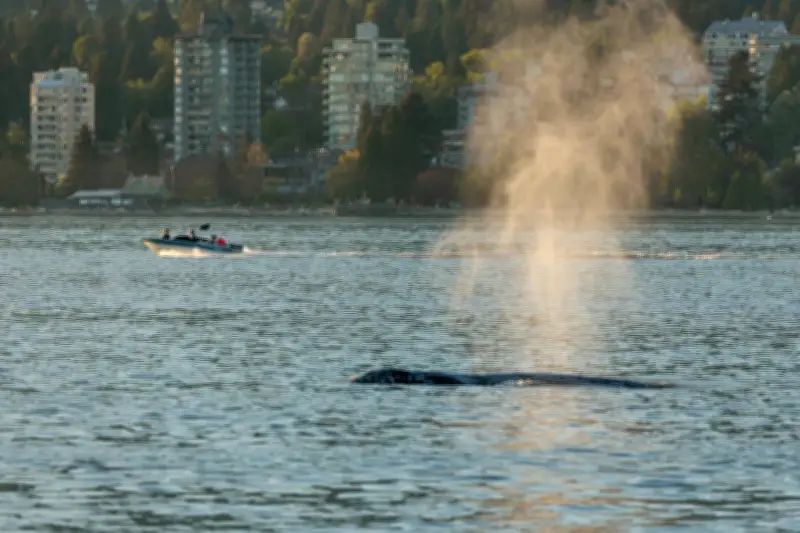
A 'year-round buffet' of food is attracting more whales to British Columbia's waters, with sightings increasing as marine life thrives due to warmer waters and abundant prey. The phenomenon has been observed by researchers and locals alike, who note that species such as grey whales are appearing in larger numbers and for longer periods.
Increased Whale Activity
Recent reports indicate that grey whales, once rare in the region, are now frequently spotted near Vancouver's Stanley Park. In one incident on May 4, 2026, a grey whale was struck by a Sea-Doo, highlighting the growing interaction between whales and human activities. The Canadian Press reported the event, noting the whale's presence in an area where such sightings were uncommon just a few years ago.
Warmer Waters and Abundant Prey
Scientists attribute the increase in whale visits to warmer ocean temperatures, which have boosted the availability of krill, small fish, and other prey. This 'year-round buffet' allows whales to feed extensively, encouraging them to linger in B.C. waters rather than migrating to traditional feeding grounds. The trend is expected to continue as climate change alters marine ecosystems.

Implications for Conservation
The return of whales presents both opportunities and challenges for conservationists. While it signals a recovering marine environment, it also raises concerns about vessel strikes and entanglement in fishing gear. Authorities are urging boaters to exercise caution in whale-rich areas. Additionally, the phenomenon could boost eco-tourism, with whale-watching tours becoming increasingly popular.
Local communities have embraced the whales, with residents reporting more frequent sightings from shore. However, experts warn that human activities must be managed to ensure the safety of both whales and people. Ongoing research aims to monitor whale populations and their behavior to inform conservation strategies.