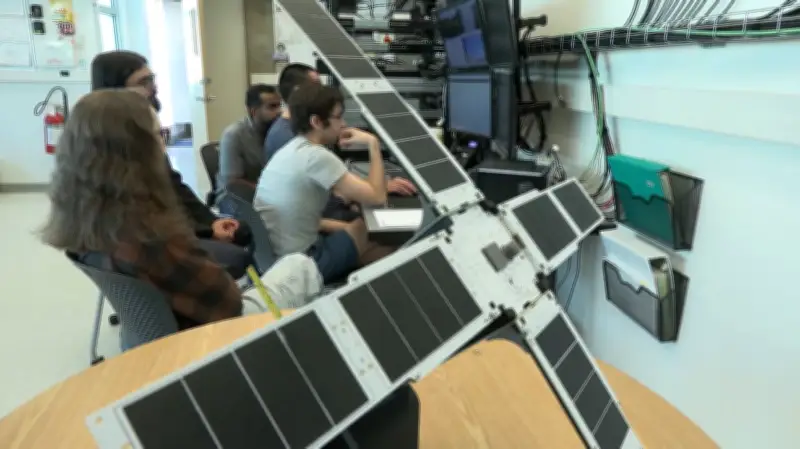
The University of Victoria (UVic) launched its second satellite on July 7, 2026, as part of its ambition to become a hub for the space industry. Students and staff successfully sent commands through an antenna to the freshly launched satellite as it flew over Victoria, marking a milestone in the university's space program.
ORCASat: A New Academic Satellite
The satellite, named ORCASat (Optical Reference Calibration Satellite), is designed to provide an absolute calibration source for ground-based telescopes. It was developed by UVic students and researchers, showcasing the university's growing expertise in space technology. The launch follows UVic's first satellite, which was deployed in 2021.
According to UVic, the project aims to train the next generation of space engineers and scientists while contributing to astronomical research. The satellite's primary mission is to help calibrate telescopes used in observatories worldwide, improving the accuracy of astronomical measurements.

Building a Space Industry Hub
UVic has been actively positioning itself as a key player in Canada's space sector. The university recently launched a new space engineering program and has partnered with local aerospace companies. Dr. Justin Albert, a UVic physics professor and lead on the ORCASat project, stated, "This launch demonstrates that UVic students can design, build, and operate satellites that contribute to global science."
The initiative aligns with British Columbia's broader strategy to grow its space industry, which includes investments in satellite technology and ground infrastructure. The province aims to attract space startups and research facilities to the region.
Technical and Logistical Details
ORCASat was carried into orbit aboard a SpaceX Falcon 9 rocket as part of a rideshare mission. The satellite is a CubeSat, a small standardized satellite format, weighing approximately 10 kilograms. It orbits at an altitude of about 500 kilometers and communicates with a ground station at UVic's campus in Victoria.
Students involved in the project gained hands-on experience in satellite design, testing, and operations. The UVic Satellite Design Team, composed of undergraduate and graduate students, worked on the satellite for over three years. "Seeing our satellite respond to commands from our own antenna is incredibly rewarding," said team member Sarah Chen.
Impact on Research and Education
The ORCASat mission is expected to enhance UVic's research capabilities, particularly in astronomy and earth observation. The calibration data from the satellite will be made available to the global scientific community. Additionally, the project has strengthened UVic's partnerships with organizations such as the Canadian Space Agency and local industry players.
UVic's space program has also spurred interest among students. Enrollment in aerospace-related courses has increased, and the university plans to launch more satellites in the coming years. The success of ORCASat positions UVic as a leader in academic satellite missions in Canada.