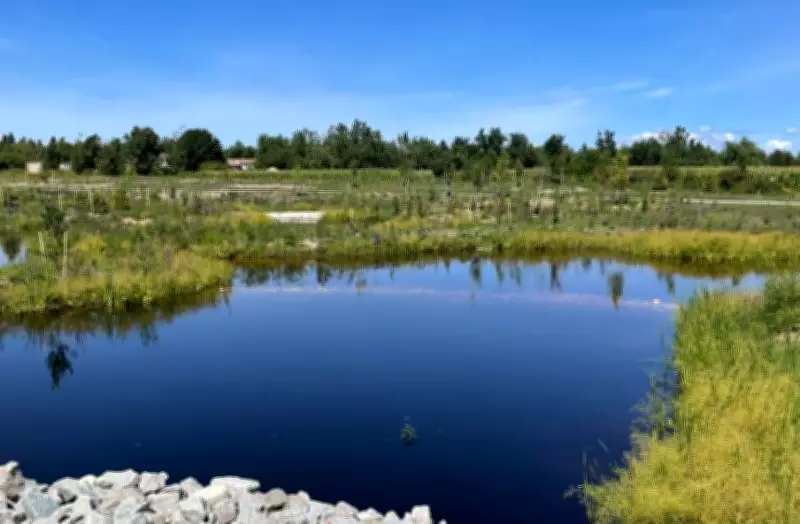
Major Stormwater Pond Renovation in Innisfil Slashes Pollution Entering Lake Simcoe
A significant environmental infrastructure project in the Town of Innisfil is delivering measurable benefits for water quality in Lake Simcoe. The Victoria Green stormwater pond, located in the community of Stroud, Ontario, has undergone a comprehensive upgrade designed to dramatically reduce the flow of pollutants into the vital lake ecosystem.
Partnership Drives Environmental Improvement
The transformative project was initiated in 2024 through a collaborative partnership between the Town of Innisfil and the Lake Simcoe Region Conservation Authority (LSRCA). This joint effort focused on retrofitting the existing stormwater management facility with advanced filtration and treatment technologies. The primary objective was to intercept and remove contaminants such as sediments, nutrients, road salts, and heavy metals before they could reach Lake Simcoe's watershed.
How the Upgraded Pond Protects Water Quality
The renovated pond operates as a multi-stage treatment system. When stormwater runoff from roads, parking lots, and residential areas flows into the basin, it passes through several engineered features. These include forebays that capture coarse sediments, specialized filter media that trap finer particles and dissolved pollutants, and extended detention zones that allow additional settling time. This process is critical for mitigating the harmful effects of urban runoff, which is a leading source of pollution for many freshwater lakes.

The upgrade specifically targets phosphorus, a nutrient that promotes excessive algae growth in Lake Simcoe. By reducing phosphorus loads, the project helps combat algal blooms that can deplete oxygen levels and harm aquatic life. The improved design also enhances the pond's capacity to manage water volume during heavy rainfall events, contributing to better flood control in the surrounding area.
A Model for Watershed Protection
Local officials and conservation experts hail the Victoria Green project as a model for municipal environmental stewardship. Investing in green infrastructure like upgraded stormwater ponds is seen as a cost-effective strategy for long-term watershed health. The success of this initiative demonstrates how targeted upgrades to existing infrastructure can yield substantial pollution reduction benefits without requiring entirely new construction.
The health of Lake Simcoe is of paramount importance to the region, supporting drinking water sources, a robust fishing industry, and numerous recreational activities. Projects that directly improve its water quality align with broader provincial and conservation goals aimed at protecting this ecologically and economically significant body of water for future generations.