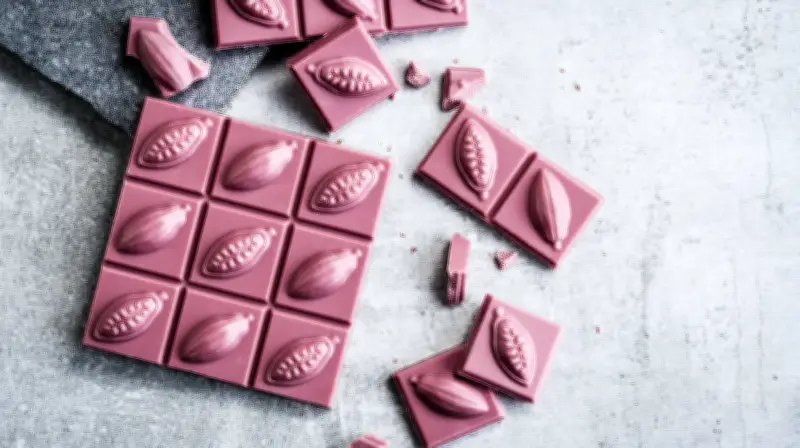
Ruby chocolate, a proprietary product created by Swiss chocolate manufacturer Barry Callebaut, was introduced at an event in Shanghai in September 2017 and first mass-marketed in early 2018. It is described as having a pinkish hue and a fruity taste, often compared to a blend of berry fruitiness and smoothness.
What Is Ruby Chocolate Made Of?
According to Megan Giller, author of "Bean-to-Bar Chocolate: America's Craft Chocolate Revolution," ruby chocolate is made from a blend of cocoa beans from Brazil, Ivory Coast, and Ecuador. Barry Callebaut claims that no color or flavor additives are used; the pink color and fruity flavor are naturally present in the beans and unlocked through a specific processing method. Bas Smit, vice president of global marketing at Barry Callebaut, stated that the product resulted from over 10 years of research and development.
Chef Dimitri Fayard of Barry Callebaut's Chicago Chocolate Academy explained that the process involves selecting specific cocoa beans and treating them to preserve natural sour flavors. A 2009 patent suggests the use of unfermented cocoa beans treated with acid. The company sells ruby chocolate to large companies and artisanal chocolatiers, not directly to consumers. Brands like KitKat, Chocolove, Magnum, Starbucks, and Prestat have used it.

How Does Ruby Chocolate Compare to Dark, Milk, and White Chocolate?
Giller noted that ruby chocolate's flavor is most similar to white chocolate with raspberries or strawberries added. It contains 47.3% cocoa solids, comparable to milk and white chocolate. Norma Salazar, chef-instructor at the Institute of Culinary Education, said that tempering ruby chocolate follows the same temperature patterns as white chocolate. Unlike dark, milk, and white chocolate, which can be made from scratch by many companies, ruby chocolate is exclusively produced by Barry Callebaut.
Controversy Surrounding Ruby Chocolate
Ruby chocolate has sparked debate among chocolate experts. Some question whether it is truly a new type of chocolate or a marketing gimmick. Chocolate expert Angus Kennedy told Business Insider that similar pink chocolate has been produced in Peru for years, describing the taste as white chocolate with raspberries. Barry Callebaut has also faced scrutiny for business practices, including a 2017 report from NGO Mighty Earth accusing the company of purchasing cocoa linked to deforestation, and a 2021 class-action lawsuit involving former child slaves alleging forced labor. Giller emphasized that many bean-to-bar companies offer transparent sourcing and production, focusing on terroir and natural flavors.