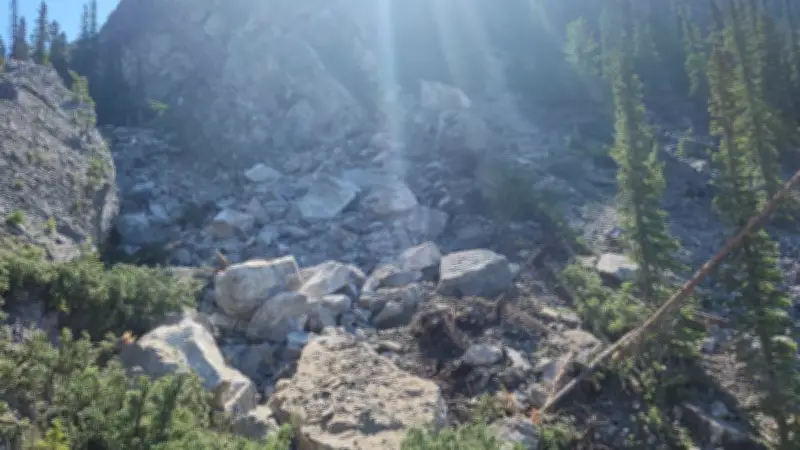
A significant rockfall in Banff National Park has forced the closure of the popular Rundle Rock climbing area after numerous boulders broke loose from the cliff face. The incident occurred on July 7, 2026, and was reported by Parks Canada officials who immediately closed the area to ensure public safety.
Details of the Rockfall
The rockfall involved multiple boulders detaching from the Rundle Rock formation, a well-known climbing destination in the park. No injuries were reported, as the area was not heavily occupied at the time. Parks Canada stated that the closure is precautionary while geotechnical assessments are conducted to evaluate the stability of the remaining rock face.
According to a Parks Canada spokesperson, “The safety of visitors is our top priority. We are working with geotechnical experts to assess the risk and determine when the area can be safely reopened.” The closure affects several popular climbing routes on Rundle Rock, which attracts climbers from across Canada and internationally.

Impact on Climbers and Park Visitors
The closure has disappointed many climbers who had planned trips to the area during the peak summer season. Local climbing guides have reported cancellations and are rerouting clients to other climbing sites in the park. The rockfall also serves as a reminder of the dynamic nature of mountain environments, where rockfalls can occur without warning.
Parks Canada advises visitors to check for updates on the park’s website and to avoid the closed area. Alternative climbing locations in Banff National Park, such as Mount Yamnuska and the Ghost River area, remain open and are being recommended to climbers.
Geological Context and Safety Measures
Rundle Rock is part of the Rundle Mountain range, composed of sedimentary rock that is prone to weathering and erosion. Rockfalls are a natural hazard in mountainous regions, often triggered by freeze-thaw cycles, heavy rain, or seismic activity. Parks Canada regularly monitors rock stability in popular areas and implements closures when necessary.
In response to this incident, Parks Canada has increased monitoring of other climbing areas in the park. The agency also reminds visitors to be aware of their surroundings and to report any signs of rock instability to park staff.