Emergency Rescue Operation for Stranded Humpback Whale in Germany
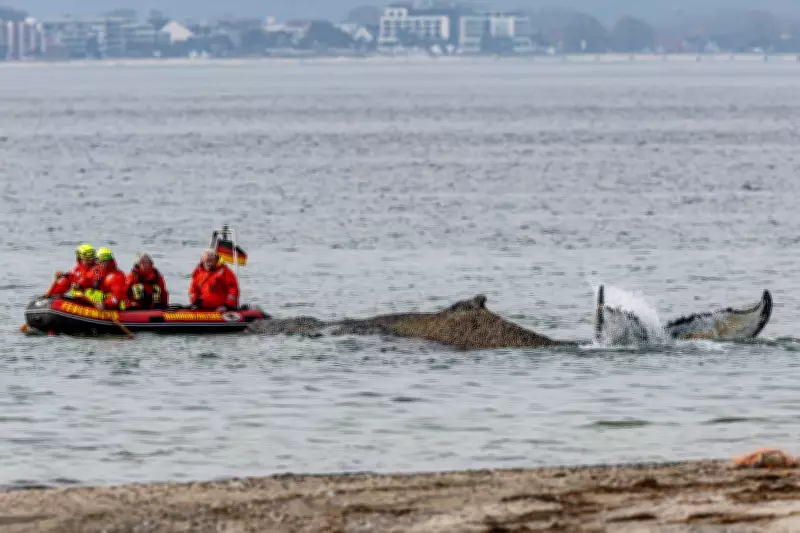
In a dramatic wildlife rescue effort, teams from the Institute for Terrestrial and Aquatic Wildlife Research, alongside local firefighters, are attempting to refloat a humpback whale that became stranded on the Baltic coast near Timmendorfer Strand, Germany. The incident, which occurred on Monday, March 23, 2026, has drawn significant attention to marine conservation challenges in the region.
Urgent Efforts to Save Marine Mammal
The rescue operation involves specialized equipment and expertise to carefully move the massive whale back into the waters of the Baltic Sea. Humpback whales, known for their acrobatic breaches and complex songs, are rare visitors to the Baltic Sea, making this stranding event particularly unusual and concerning for marine biologists.
Experts from the wildlife research institute are coordinating with emergency responders to assess the whale's condition and determine the safest method for refloating. Such operations require precise timing, often dependent on tidal conditions, to minimize stress on the animal and ensure a successful return to its natural habitat.

Challenges of Marine Wildlife Rescue
Strandings of large cetaceans like humpback whales pose significant logistical and ethical challenges. Rescuers must balance the urgency of the situation with the need to avoid causing further injury to the whale. The Baltic Sea's relatively shallow and brackish waters can complicate these efforts, as they differ from the whale's typical oceanic environment.
This incident underscores the broader issues facing marine wildlife in changing oceanic conditions, including potential impacts from climate change, pollution, and human activities. Successful rescues rely on rapid response and interdisciplinary collaboration between scientists, conservationists, and local authorities.
Importance of Conservation Awareness
The stranding has sparked public interest and concern, highlighting the importance of marine conservation efforts. Humpback whales, once heavily hunted, have seen populations recover in many areas due to international protection measures, but they remain vulnerable to threats such as ship strikes and entanglement in fishing gear.
As rescue teams continue their work, this event serves as a reminder of the delicate balance between human activities and marine ecosystems. Ongoing monitoring and research are crucial to understanding and mitigating the factors that lead to such strandings, ensuring the long-term survival of these majestic creatures in our oceans.