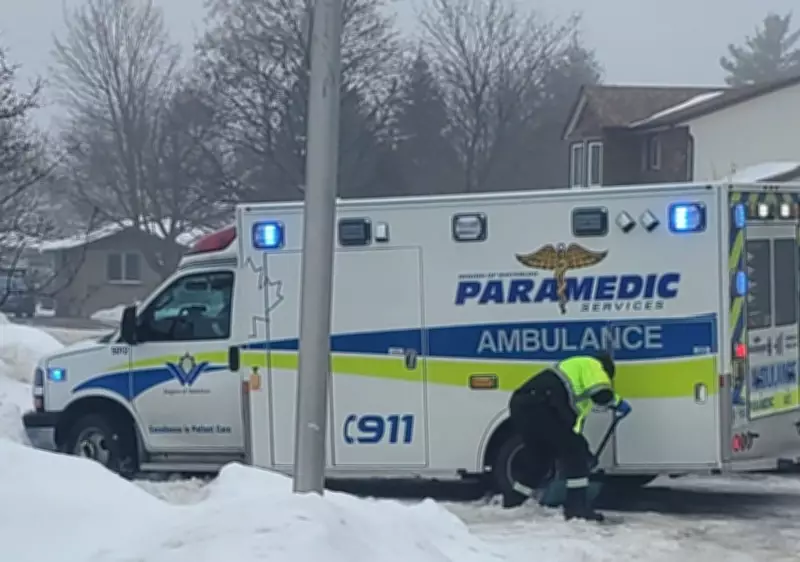
Paramedic Forced to Dig Out Ambulance Stuck in Heavy Snowfall
In a striking incident that underscores the harsh realities of winter emergency response, a paramedic in Kitchener was compelled to personally dig out their ambulance after it became immobilized by deep snow on a local road. The event occurred during a period of severe winter weather, which has been affecting much of the region with below-average temperatures and significant snowfall.
Challenges for Emergency Services
This situation highlights the ongoing difficulties faced by first responders during extreme winter conditions. Paramedics and other emergency personnel often encounter hazardous driving conditions that can delay critical responses to medical emergencies. The need for self-rescue in this case points to potential gaps in support systems for frontline workers during snowstorms.
Winter weather has been particularly brutal this season, with temperatures plummeting and snow accumulation creating treacherous road conditions across many areas. Environment Canada has issued multiple warnings for freezing rain, winter storms, and extreme cold, complicating travel and emergency operations.

Broader Context of Winter Incidents
The ambulance incident is not isolated, as numerous weather-related challenges have been reported recently. For instance, police have noted crashes across the Greater Toronto Area due to messy weather mixes, while Saskatoon Transit experienced delays from heavy snowfall. Such conditions force emergency services to adapt quickly, sometimes with limited resources.
Community safety remains a paramount concern, especially when school buses and other public transport are affected. In a related event, four children sustained minor injuries in a school bus crash, with some first responders potentially having children on board, adding emotional complexity to rescue efforts.
Response and Preparedness
Authorities emphasize the importance of winter preparedness for both individuals and organizations. This includes proper vehicle maintenance, adequate staffing during storms, and community awareness programs. The paramedic's actions demonstrate the resilience required in these roles, but also raise questions about whether additional support, such as better-equipped vehicles or coordinated snow removal, could prevent similar situations.
As climate patterns shift, with events like "False Spring" giving way to sudden snowstorms, emergency services must continually evaluate and update their strategies to handle unpredictable weather. This incident serves as a reminder of the vital work done by paramedics and other first responders, often under challenging and dangerous conditions.