Coastal Erosion Claims More Homes on North Carolina's Outer Banks
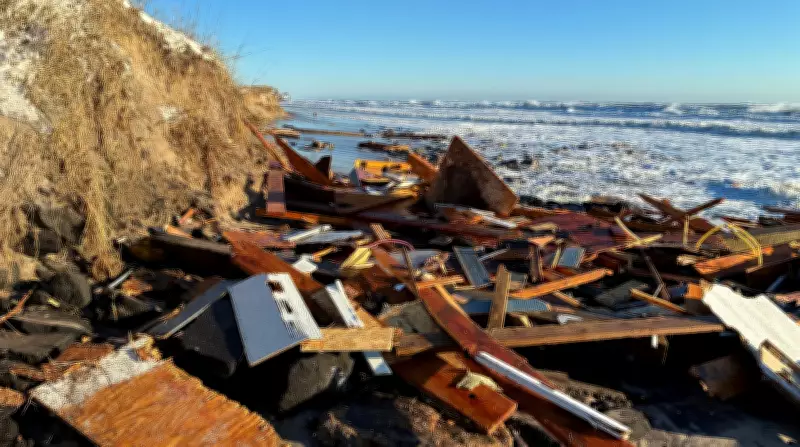
The relentless forces of nature have claimed additional victims along North Carolina's fragile Outer Banks, with several more beachfront homes succumbing to the powerful Atlantic Ocean. The latest collapses have littered the shoreline with hazardous debris while highlighting the accelerating coastal erosion threatening this iconic barrier island chain.
Historic Winter Storm Intensifies Destruction
Video footage circulating on social media captures the dramatic moment when entire structures buckle and drift away in the turbulent surf along the Cape Hatteras National Seashore. This destruction follows a historic winter storm that battered the Carolinas with high wind gusts and significant snowfall, exacerbating already precarious conditions along the vulnerable coastline.
As of Sunday, four privately owned homes in the village of Buxton have collapsed into the ocean. This brings the sobering total to 20 homes lost since September alone, and 31 properties destroyed since May 2020, according to the National Park Service. Fortunately, all four recently destroyed homes were unoccupied at the time of their collapse.

Cleanup Challenges and Environmental Concerns
Officials are now grappling with the complex task of developing a cleanup strategy for the scattered debris. David Hallac, superintendent of the Cape Hatteras National Seashore, explained the difficulties in coordinating with property owners.
"At least a couple of the homeowners have been working with us to inquire about permits for cleanup. Two of them have contacted us," Hallac told Island Free Press. "The debris is still washing up, so we're just trying to understand how far it goes — letting the dust settle."
Wide sections of the narrow coastline, located approximately 100 miles south of Virginia Beach, have been closed to the public due to safety concerns. Authorities attribute the escalating destruction to worsening coastal erosion and rising sea levels, environmental challenges that show no signs of abating.
Historical Context and Financial Realities
Most of the Outer Banks homes that have collapsed were originally constructed during the 1970s, 1980s, and 1990s, when these properties stood much farther from the threatening surf. Local government officials note that changing coastal dynamics have dramatically reduced the buffer between structures and the ocean.
The financial burden of addressing this crisis falls heavily on homeowners. Relocating a threatened home or having it professionally demolished before collapse represents a significant expense that many property owners cannot afford. Consequently, numerous homeowners must wait for their damaged properties to eventually succumb to the sea before they can file insurance claims.
According to Dare County authorities, where these properties are located, homeowners who file successful insurance claims can receive:
- Up to $250,000 for the structure itself
- Up to $100,000 for the contents of the home
Proactive Measures and Conservation Efforts
In 2023, the National Park Trust announced a partnership with the National Park Service to address the growing crisis. This collaboration resulted in the purchase and safe removal of two at-risk homes in Rodanthe, located approximately 25 miles north of Buxton.
This initiative utilized resources from the Land and Water Conservation Fund, which employs earnings from offshore oil and gas leases to protect vulnerable land, water resources, and historic sites. While such measures represent important steps forward, they address only a fraction of the properties at risk along the rapidly eroding coastline.
Park officials have not responded to recent media inquiries regarding the ongoing situation, leaving many questions unanswered about long-term strategies for protecting both property and the natural environment along this cherished stretch of American coastline.