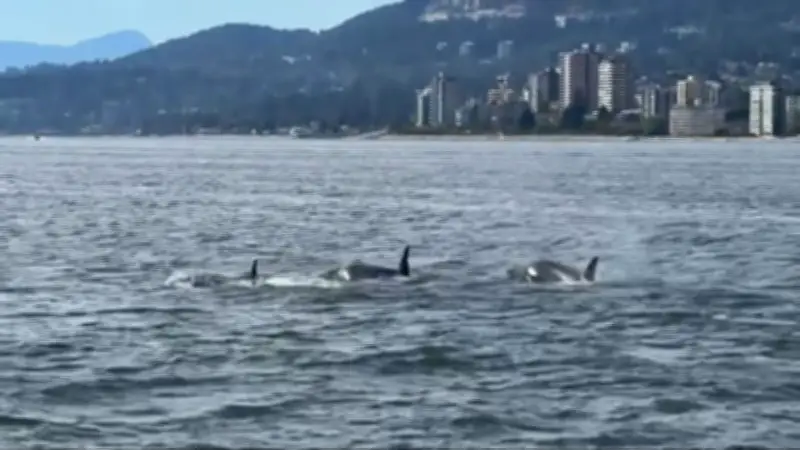
A trio of orcas was seen swimming under the Lions Gate Bridge near Vancouver on Tuesday afternoon, according to video footage captured by bystanders. The sighting occurred around 2:30 p.m. local time, with the whales passing beneath the iconic bridge connecting Vancouver to the North Shore.
Rare Urban Orca Sighting
The orcas, believed to be part of a transient pod, were observed moving slowly through the Burrard Inlet. Witnesses reported the whales surfaced several times, drawing crowds to the seawall and nearby viewpoints. Marine experts noted that while orcas are common in the coastal waters of British Columbia, sightings this close to downtown Vancouver are relatively unusual.
"It's a once-in-a-lifetime experience for many people," said Dr. Sarah Johnson, a marine biologist at the University of British Columbia. "Seeing these magnificent animals in such an urban setting reminds us of the rich biodiversity in our region."

Video Captures the Moment
A video posted on social media shows the three orcas gliding under the bridge's steel arches, their dorsal fins slicing through the water. The footage quickly went viral, amassing thousands of views within hours. Local news outlets reported that the orcas appeared healthy and were likely hunting for seals.
Transport Canada issued a advisory reminding boaters to maintain a distance of at least 400 meters from the whales to avoid disturbing them. The agency noted that orcas are protected under the Species at Risk Act, and harassment can result in fines up to $500,000.
Conservation Significance
The sighting comes amid ongoing efforts to protect southern resident killer whales, a distinct population that frequents the Salish Sea. Unlike the transient orcas seen Tuesday, the southern residents are critically endangered, with only 73 individuals remaining as of 2025. Conservation groups have called for stricter regulations on vessel traffic and salmon habitat restoration to support their recovery.
"Every sighting is an opportunity to educate the public about the challenges these animals face," said Jane Smith of the Pacific Whale Watch Association. "We urge everyone to enjoy the view responsibly."