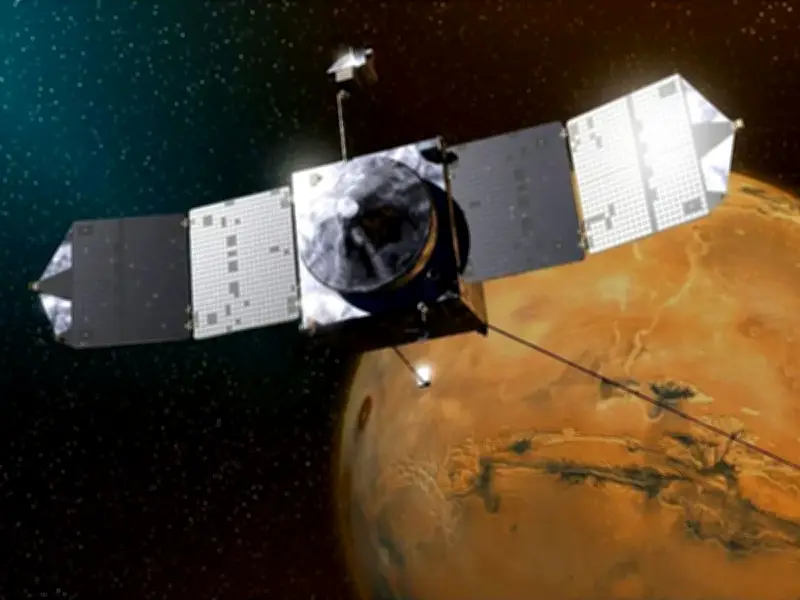
NASA announced on Wednesday that it will officially end its Mars Atmosphere and Volatile Evolution (MAVEN) mission after the probe went silent for six months. The spacecraft, which entered Martian orbit in 2014, was originally designed to operate for one to two years but exceeded expectations by remaining active for more than a decade. However, in December 2025, communication with Earth was lost, and after months of silence, NASA has decided to pull the plug on the mission.
Mission Overview and Achievements
The MAVEN probe was launched to study the Martian atmosphere and its evolution over time. It provided invaluable data on atmospheric escape, the process by which gases leak from the planet's atmosphere into space. According to Shannon Curry, an astrophysics professor involved in the mission, MAVEN was the "best Mars mission ever." She explained that the probe allowed scientists to understand atmospheric escape at Mars better than at any other planet, including Earth. "Consequently, Mars serves as an incredible natural laboratory for understanding rocky planet atmospheres," Curry said.
Key Contributions to Mars Science
NASA exploration program chief Tiffany Morgan highlighted that MAVEN "profoundly advanced our understanding of Mars's atmosphere, climate history, and habitability." The probe not only studied the atmosphere but also acted as a communications relay between Earth and NASA's robots on the Martian surface. With MAVEN now silent, other orbiters will need to take over these relay duties.

The U.S. space agency stated that it will investigate the cause of the loss of communication. Despite the end of the mission, the data collected over more than a decade will continue to be analyzed by scientists worldwide.
Impact on Future Mars Exploration
The MAVEN mission has left a lasting legacy in planetary science. Its findings on atmospheric escape are crucial for understanding the history of Mars' climate and its potential to support life. The probe's long operational life far exceeded its initial design, demonstrating the durability and success of the spacecraft. As NASA moves forward, the lessons learned from MAVEN will inform future missions to Mars and other rocky planets.