Lake Erie Approaches Historic Freeze Levels During Severe Winter Season
Lake Erie is experiencing an extraordinary winter freeze, with more than 95 percent of its surface now covered in ice. This remarkable ice coverage represents the highest level observed at this time of year since 2011, according to data from Great Lakes researchers. The shallowest of the Great Lakes is approaching record conditions as colder-than-average temperatures persist across the region.
Rapid Ice Formation and Historical Context
What makes this winter particularly noteworthy is not just the extent of ice coverage, but the astonishing speed at which it formed. According to Mike McKay, director of the University of Windsor's Great Lakes Institute for Environmental Research, Lake Erie transformed from just one percent ice coverage on January 14 to more than 60 percent coverage just six days later. Between January 14 and 20 alone, approximately 20,000 square kilometers of new ice formed across the lake's surface.
James Kessler from the U.S. National Oceanic and Atmospheric Administration's Great Lakes Environment Research Laboratory noted that there have been only seven years in the historical record when Erie's ice cover has been this high or higher on February 1. Since ice cover records began in 1973, Lake Erie has completely frozen over only three times: in 1996, 1979, and 1978. The closest it has come to a full freeze on February 1 was 98.5 percent ice coverage in 1997.

Environmental Impacts and Benefits
For residents living in lower-lying areas along Lake Erie's shoreline, the extensive ice cover provides significant benefits. Tim Byrne, chief administrative officer for the Essex Region Conservation Authority, explained that winter wind and storm conditions pose the most significant threat to exposed shoreline areas. The substantial ice coverage acts as a natural buffer against damaging winter winds, waves, and erosion conditions.
"This is a very good thing for people within our watershed that are exposed to damaging winter winds, waves and erosion conditions," Byrne emphasized. He added that while recent years have seen milder trends, the current ice coverage represents what would have been considered a typical or normal winter historically.
Navigation Challenges and Coast Guard Response
The rapid ice formation created significant challenges for maritime navigation. McKay noted that the freeze followed a cold December, a brief mild spell, and an unusually late shipping season. Both the Soo Locks and Welland Canal remained open until January 15—later than normal—meaning numerous vessels were still operating in the Great Lakes when ice conditions deteriorated rapidly.
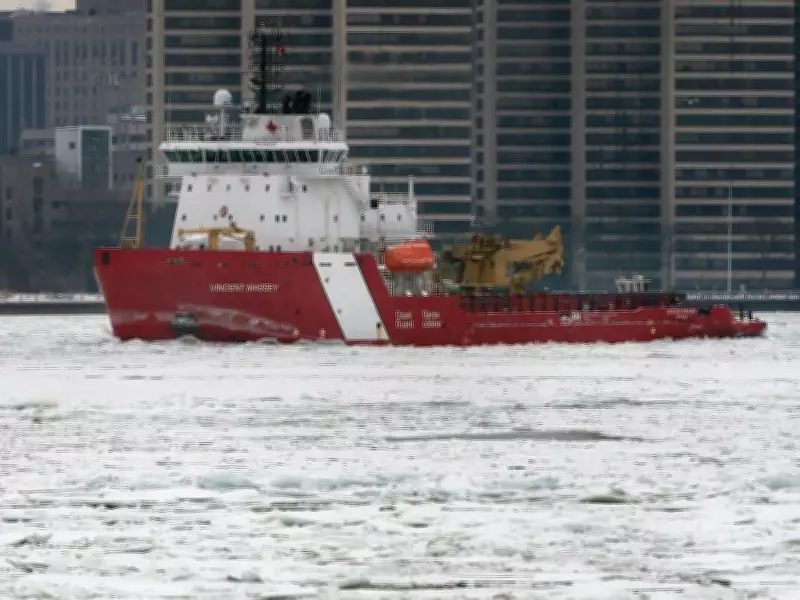
Several ships that would typically have been laid up for winter found themselves trapped by ice, requiring extensive icebreaking operations by both Canadian and U.S. Coast Guard vessels. The Canadian Coast Guard icebreaker Vincent Massey was observed navigating the icy Detroit River toward Lake Erie, highlighting the ongoing efforts to maintain navigational routes.
Regional Observations and Future Projections
Throughout the region, ice conditions remain substantial. The Detroit River upstream from the Ambassador Bridge near downtown Windsor appeared ice-packed, while Lake Erie's western-most reach in Amherstburg showed extensive ice coverage. As the colder weather continues, researchers expect ice coverage to potentially increase further.
"I do expect it to continue to increase," Kessler stated from the NOAA lab in Ann Arbor. The combination of sustained cold temperatures and Lake Erie's relatively shallow depth creates ideal conditions for continued ice formation and maintenance throughout the winter season.