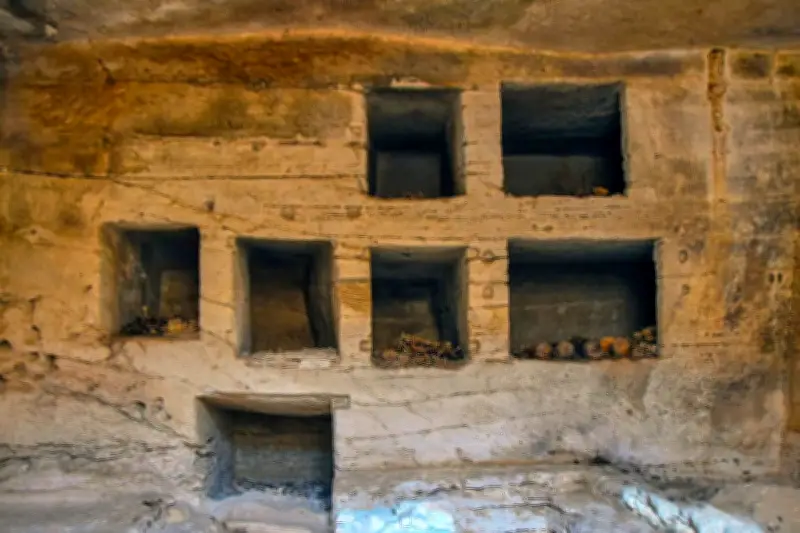
Egyptian archaeologists have uncovered a lost Byzantine-era city in the western desert, the Ministry of Tourism and Antiquities announced Saturday. The discovery was made at the Marina el-Alamein archaeological site, located west of the Mediterranean city of Alexandria.
Seven limestone tombs among key finds
The excavation revealed seven surface limestone-built tombs, along with remnants of residential buildings, streets, and a water system. The tombs date back to the Byzantine period, which spanned from the 4th to the 7th century AD. According to the ministry, the site was once a thriving urban center before being abandoned.
Significance of the discovery
This find sheds light on urban planning and daily life during the Byzantine era in Egypt. The well-preserved tombs contain burial chambers and artifacts that may provide insights into funerary practices. The ministry emphasized that further excavations are planned to uncover more structures and artifacts.

“This is a significant addition to Egypt’s archaeological heritage,” said a ministry official. “The site reveals how Byzantine communities adapted to the desert environment.”