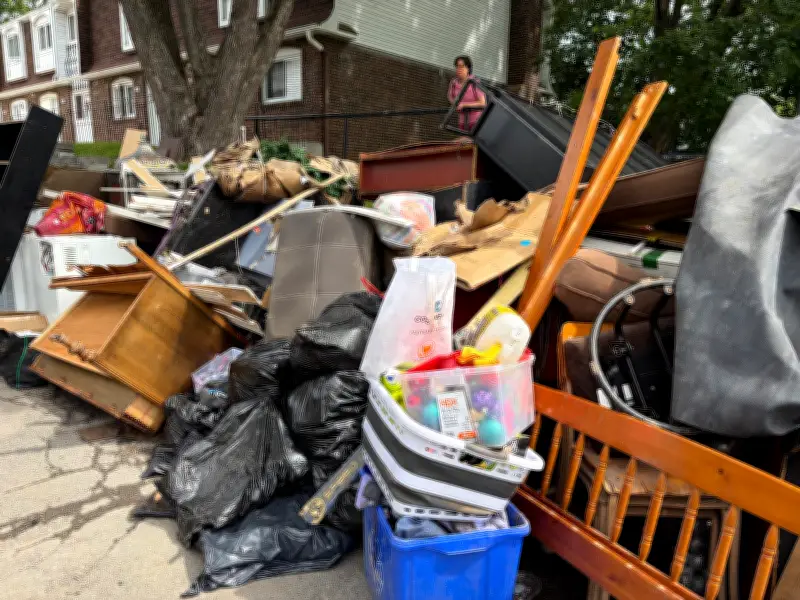
Residents in Dollard-des-Ormeaux (DDO), a suburb on Montreal's West Island, are reeling after intense flooding overwhelmed their neighbourhoods, with many pointing fingers at the city's aging infrastructure. The deluge, which struck on June 23, 2026, left basements submerged, streets impassable, and families scrambling to salvage belongings.
Flooding Devastates Homes and Businesses
The heavy rainfall, which exceeded local drainage capacity, caused water to rise rapidly in low-lying areas. Homeowners reported water levels reaching several feet, damaging furnaces, electrical systems, and personal possessions. Local businesses also suffered losses, with some forced to close temporarily. “We’ve never seen anything like this,” said a resident who declined to give their name. “The water came up so fast, we barely had time to move things upstairs.”
According to municipal officials, the storm dumped over 100 millimetres of rain in less than 12 hours, overwhelming the stormwater system. The city has deployed pumps and sandbags, but residents argue that years of underinvestment in drainage infrastructure are to blame. “This is not a one-time event; it’s happening more often,” said another resident. “The city needs to step up and fix the pipes before the next storm.”

Infrastructure Under Scrutiny
Montreal’s aging sewer and drainage systems have long been a concern, with many areas relying on combined sewers that can overflow during heavy rain. A 2023 report by the city’s auditor general highlighted that 30% of Montreal’s water infrastructure is over 50 years old and in need of replacement. However, funding for upgrades has lagged, with the city prioritizing other projects.
DDO Mayor Alex Bottausci acknowledged the problem but noted that fixing the infrastructure would require significant investment. “We are aware of the issues and are working with the city of Montreal to secure funding for improvements,” he said. “But these are multi-million-dollar projects that take time.”
Residents, however, are demanding immediate action. “We can’t wait another decade for studies and plans,” said a local community leader. “Our homes are being destroyed, and our insurance premiums are skyrocketing.”
Climate Change Intensifies Storms
Experts point to climate change as a factor in the increasing frequency and intensity of such storms. A study from Environment Canada found that extreme precipitation events in the region have risen by 20% over the past 30 years. “The infrastructure was designed for a climate that no longer exists,” said Dr. Marie-Josée Roy, a climatologist at Université de Montréal. “Cities need to adapt by upgrading drainage systems and implementing green infrastructure like rain gardens and permeable pavements.”
The flooding in DDO is part of a broader pattern across Montreal, with other West Island communities also reporting damage. In nearby Pointe-Claire, streets were flooded, and residents used sandbags to protect homes. The city of Montreal has declared a state of emergency for affected areas, allowing for faster deployment of resources.
Calls for Long-Term Solutions
Community groups are urging the city to develop a comprehensive flood management plan that includes both infrastructure upgrades and emergency preparedness. “We need a holistic approach that addresses the root causes,” said a spokesperson for the West Island Community Coalition. “This includes investing in green infrastructure, updating building codes, and creating better early warning systems.”
In the meantime, residents are left to deal with the aftermath. Many are filing insurance claims, but some report that policies do not cover sewer backup or overland flooding. “We’re looking at tens of thousands of dollars in damage, and the insurance company says it’s not covered,” said a homeowner. “We feel abandoned.”
The city has promised to review its infrastructure priorities and has scheduled a public meeting for next week to hear resident concerns. However, for those who have lost belongings and face months of repairs, the promise rings hollow. “We need action, not meetings,” said the resident. “Next time, we might not be so lucky.”