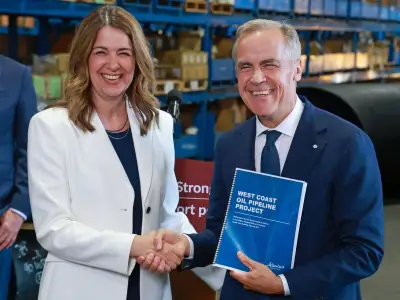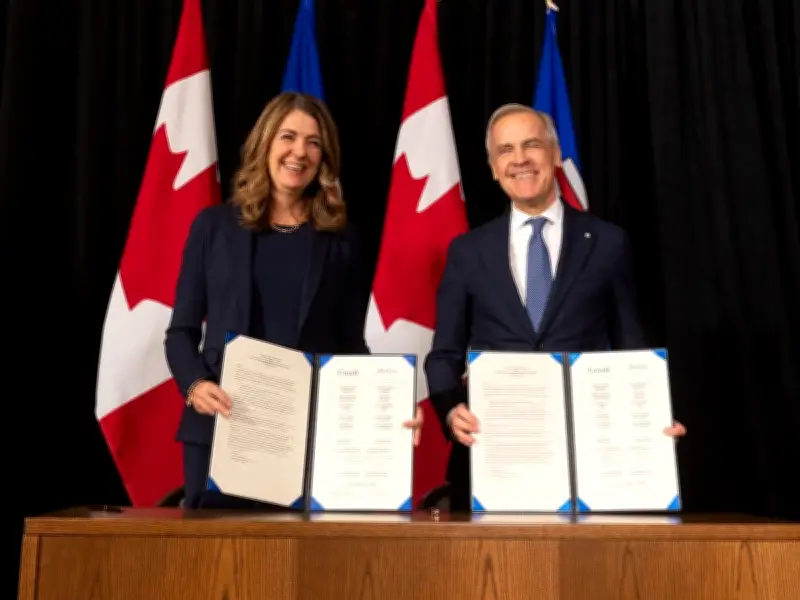
Prime Minister Mark Carney has struck a series of deals with British Columbia and Alberta that could unlock a new era of oil and gas growth, but critics warn the promises remain largely unfulfilled. The agreements, announced in late May 2026, include a commitment to a new West Coast oil pipeline, accelerated LNG projects, and billions in federal spending on infrastructure and child care in B.C.
Pipeline deal ends B.C. opposition
The most significant move is the federal-provincial agreement to build a new oil pipeline to the West Coast, closely following the route of the existing Trans Mountain line and terminating at the Roberts Bank Terminal in Vancouver. In exchange, B.C. Premier David Eby dropped his opposition to the pipeline, which had been a major obstacle. The deal also preserves the federal tanker ban on the north coast, a red line for Eby and some First Nations.
“Two years ago, a West Coast pipeline was not even in the back of people’s minds. Now, I think we’re going to get another West Coast pipeline shipping a million barrels a day to Asia,” said Heather Exner-Pirot, director of natural resources, energy and the environment at the Macdonald-Laurier Institute. She added that it is “very improbable” given the political divisions between B.C.’s NDP government and Alberta’s United Conservative Party, but expressed optimism about the Carney government’s commitments.

Billion-dollar incentives for B.C.
To secure Eby’s support, Carney signed a “prosperity partnership” that grants accelerated permitting, financing, and construction for four major LNG projects: LNG Canada Phase 2, Ksi Lisims, Cedar, and Woodfibre. The deal also invests $500 million in the Red Chris copper mine expansion, $3.9 million in the North Coast Transmission Line, $3 billion in the George Massey Tunnel Replacement, and $630 million in affordable child care in B.C. Critics call it a “gigantic bribe,” but Carney’s government notes these were projects it was already promoting.
Alberta’s renewed optimism
In Alberta, the announcements have boosted confidence, especially during Calgary’s Stampede season. Premier Danielle Smith has hailed the potential for a new “super-cycle of production growth.” The oilsands have seen production rise from 610,000 barrels per day in 2000 to an average of 3.5 million barrels per day in 2025, driven by a low-royalty, high-volume extraction model. However, the new pipeline and LNG projects remain in early stages, with construction years away.
“The mood is good, I’ll tell you that much,” Exner-Pirot said, noting that the Carney government’s commitments have made it harder for Alberta separatists to argue that Ottawa is trying to hobble the oil industry.