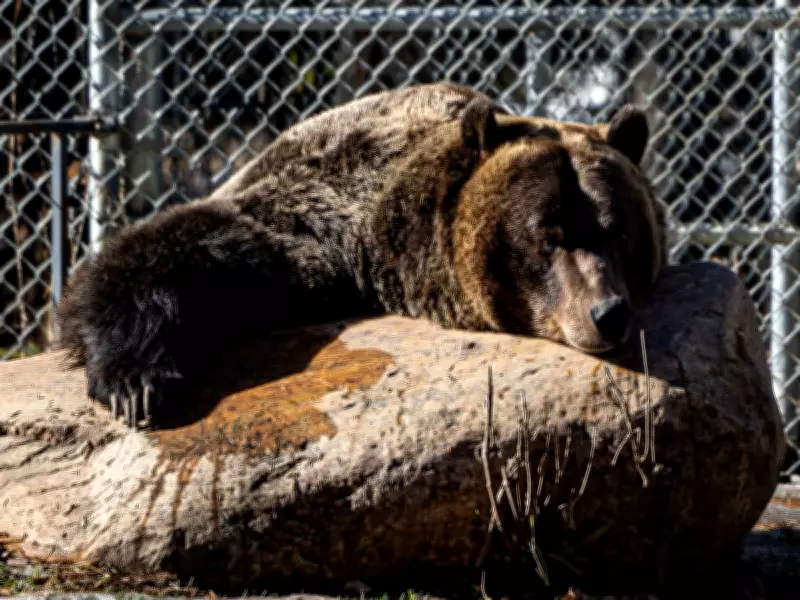
On an early morning of one of spring's nicer days, Mistaya the grizzly bear is slumped over a rock in the sunlight, doing his best impression of laundry being hung out to dry. He sees one of the zoo staff speaking with someone outside his enclosure, and sluggishly meanders over to see what's going on before making his way back indoors.
Mistaya and Koda are the Saskatoon Forestry Farm Park and Zoo's resident grizzlies, and they just emerged from torpor, a kind of periodic hibernation that can last four to seven months. Despite their current lazy nature, zoo curator Kelly Harmsworth said caring for the pair is a full-time job.
Full-Time Dedication to the Bears
"We try to dedicate someone to the bears all day, everyday," Harmsworth said. To create consistency, the zoo tries to keep the same person assigned to the bears, who have been living at the Saskatoon zoo since 2008. They celebrated their 20th birthdays last summer.

"Keeping them busy is hard. The bears put on the miles, they forage, they're digging, they're playing," Harmsworth added. A typical day includes multiple feedings, scattering food in different places while the bears are locked out for safety while other staff members pitch in.
Other staff members help make sure the dedicated bear worker can still have days off. It's only been a few years since the zoo started having someone specifically dedicated to the bears, Harmsworth says. "Seeing the needs that these specific bears have, we wanted to make sure that we were giving them what they needed."
Consistency and Trust with All Animals
The zoo likes to maintain a similar consistency with all its animals; having the same people work with the same animals helps create trust. "But the bears, they are higher maintenance than the rest of the species out here," Harmsworth noted.
Post-Torpor Care and Enrichment
Grizzlies coming out of torpor in the early spring are quite slow to start. It can take a few days before they have their first bowel movement. In these groggy, early days, food consists of alfalfa hay and lettuce, slowly building the amount to just over 10 kilograms a day by the summertime, and introducing fruits, vegetables, and fish along the way. Mistaya and Koda's weight is closely monitored to make sure they have enough fat packed on to get through the winter.
The bears also need enrichment — activities that elicit natural behaviours from Mistaya and Koda. Harmsworth gave an example of hiding treats in a box full of hay, which forces the bears to rip it open and dig through. It requires researching, building and placing the enrichment in the right places around the enclosure, then reviewing its effectiveness. Harmsworth says one project required two staff members to drag an item into the enclosure — an "exhausting" task — and "Mistaya came out, sniffed it, took his paw and flipped it and it rolled three times."