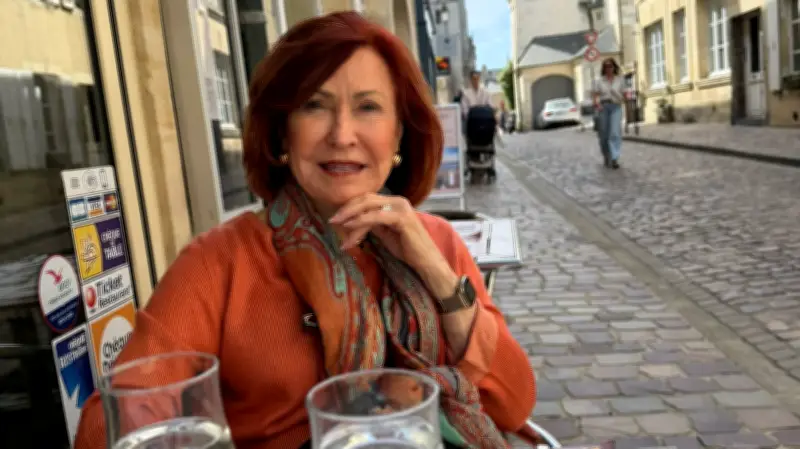
Three years ago, Diane Heiler stood beside her husband Al’s bed and prepared to say goodbye. After 25 years of marriage, cancer was taking him where she could not follow. Before he died, he looked at her and said something that shocked her at the time: “Diane, you’ll need another man.”
She immediately dismissed the idea. She was 80 years old and had already experienced a full life. But just a few months after Al died, friends introduced her to a man named Bob. She welcomed the connection because she was experiencing what she later discovered, after many late-night Google searches, was called “widow’s fire” — a fierce longing for intimacy and closeness after losing a spouse that, despite being surprisingly common, few people talk about.
Finding Love Again at 80
Some people, including some of her children, thought it was too soon for her to begin dating. But grief doesn’t follow a timeline. She wasn’t looking to replace Al. No one could. But for 25 years of marriage, she had been part of a pair. Suddenly, she was standing alone. The silence and loneliness were overwhelming. She realized she didn’t want to spend the rest of her life alone. She wanted companionship, laughter, conversation and physical attraction. To her surprise, she found that in Bob, a kind, funny and handsome man who understood that loving him didn’t mean she loved Al any less.

Bob and Diane have been together for more than two years. They are deeply committed to one another, but marriage isn’t part of their equation. At their age, they’ve learned that relationships don’t need to look a certain way to be meaningful. What works for them is love, honesty and a healthy dose of practicality.
Planning a 22-Day Adventure Across Europe
That practicality was put to the test recently when Bob and Diane embarked on a 22-day adventure through Norway, France and Spain. With Diane at 82 and Bob at 83, traveling halfway around the world requires a little more planning than it did a few decades ago. Before they left, Diane sent an email introducing her daughter and son-in-law to Bob’s brother and sister — not because they were planning a family reunion, but because they were about to cross an ocean together.
“Should we get lost along the way and need your assistance,” she wrote, “you now can connect with one another and try to retrieve, grieve or rejoice from our far distant travels.” She also informed everyone that she had travel insurance in case her body needed to be shipped home and that Bob had thoughtfully prepared his own end-of-life arrangements. Her children thought it was hilarious. Bob’s family may have thought she was crazy. They’re not entirely wrong.
But if you’re going to travel the world in your 80s, you learn to laugh about the realities that come with it. Like money. People don’t like talking about finances in matters of romance, but they should. In their case, Diane happens to have a larger wallet than Bob. Before they left, they talked openly about expectations. She agreed to pay for the trip itself, including the airline tickets. Bob was perfectly willing to fly economy. She was perfectly unwilling to sit in first class without him. “The good Lord knows I’m spoiled, and I wasn’t going to be up front sipping champagne while the man I loved was squeezed into seat 34B,” she wrote. They agreed that he would cover many of the extras along the way, including meals, excursions and spontaneous treats. There were no complicated contracts. Just two adults having an honest conversation.
Lessons From the Journey
Standing in Norway, surrounded by glaciers that looked as though they belonged on another planet, Diane found herself thinking about Al. He loved to travel. The glacier train rides were breathtaking. The scenery was so beautiful it almost didn’t seem real. It was colder than a witch’s teat but magnificent. Al and she had never made it to Norway together, and she couldn’t stop thinking about how much he would have loved it. Unexpectedly, she didn’t feel guilty. “For a long time, widows are made to feel that happiness somehow betrays grief. It doesn’t. Missing Al and loving Bob can occupy the same space. Both things are true,” she said.

Bob understood that. He never tried to compete with her memories. He simply stood beside her while she carried them. Norway also introduced her to two things she never expected: iced cider and brown cheese. The cider was delicious. The cheese was downright addictive. She liked it so much that she packed half a pound of it in her suitcase and hauled it through France, Spain and all the way back home to Florida. At 82 years old, she apparently travels internationally with contraband cheese.
In Bergen, she announced to Bob, “I could live here.” It had everything she loves: beauty, charm, walkability and friendly people. They spent their days wandering old streets, taking in spectacular views and pretending, just for a moment, that they belonged there.
Normandy’s Impact and Spain’s Challenges
Of all the places they visited, Normandy affected Diane the most. Standing among the endless rows of white crosses at the American Cemetery overlooking Omaha Beach, she felt humbled in a way that is difficult to describe. “The older I get, the more familiar loss becomes. Friends die. My spouse died. Parents die. Even pieces of ourselves disappear. The woman I was at 40 no longer exists. Neither does the woman I was before widowhood. Yet there I was, halfway around the world, still creating memories. Still laughing. Still planning. Still living,” she wrote.
Spain brought its own lessons. Diane uses wheelchair assistance because of a painful foot. Bob uses a cane. Airport assistance services managed to leave them at the wrong gate on two separate occasions, causing them to miss their flights. After missing the second flight, she told Bob she could have learned to become a professional tango dancer in less time than it took airport personnel to move her behind through that airport. For two days they were shuffled from gate to gate while trying not to lose their sense of humor. Thankfully, they succeeded.
By the time they reached Mallorca after nearly three weeks abroad, they realized something. They may have been tourists, but they didn’t particularly want to be around tourists anymore. Maybe they were tired. Maybe they missed their own beds. Or maybe they had officially become old people. Either way, home was sounding awfully good.
The Gift of Aging
Traveling at 82 also comes with one unexpected advantage: she no longer cares about impressing anyone. When she was younger, she packed as though every day required a completely different outfit, matching shoes, jewelry and accessories. These days, she packs for comfort, practicality and the occasional nice dinner. For 22 days abroad, Bob and she shared one checked suitcase, and each carried a small bag. “It wasn’t because we were trying to prove anything. It’s simply that we’ve learned what matters and what doesn’t,” she said.
She’s discovered that one scarf, one pair of comfortable shoes and a little confidence can carry you remarkably far. “That’s one of the gifts of aging. You spend less time worrying about how you look and more time enjoying where you are. At this age, I’ve learned that nobody really cares what you’re wearing, whether your hair is perfect or if you’ve packed the right shoes. What people remember is whether you laughed, loved, showed up and enjoyed the journey,” she wrote.
A New Chapter of Life
The greatest surprise of the trip wasn’t Norway’s glaciers, Normandy’s history or Barcelona’s architecture. It was realizing how comfortable she has become with this unexpected chapter of her life. If you had told her three years ago, while she was sitting beside Al’s hospital bed, that she’d be crossing Europe with another man, she would have told you that you were out of your mind. “If widowhood has taught me anything, it’s that we don’t honor those we’ve lost by stopping our lives. We honor them by continuing to live them. When Al died, I thought my story was winding down. Instead, it simply changed genres,” she said.
These days, she’s perfectly content sitting beside a pond with Bob discussing books, sports, grandchildren, politics or whatever they’re streaming on Netflix. Twenty years ago, she would have called that boring. Now she calls it happiness. One of the most damaging myths about aging is that life becomes smaller. She’s found the opposite: life becomes more precious. At some point, every one of us realizes our time is finite. The horizon becomes visible. Oddly enough, that’s what makes each day matter more.
At 82, the future looks different than she imagined. It includes a new love, a few more aches and pains, occasionally a wheelchair, and gratitude for every single day she still gets to wake up and see what comes next. Al knew all this before she did. He knew she would need companionship, laughter, someone to sit beside her on airplanes and hold her hand during life’s inevitable turbulence. Most of all, he knew she would need a future. As it turns out, he knew her better than she knew herself.