Alberta Premier Challenges Federal Conservation Strategy, Citing Wildfire Dangers
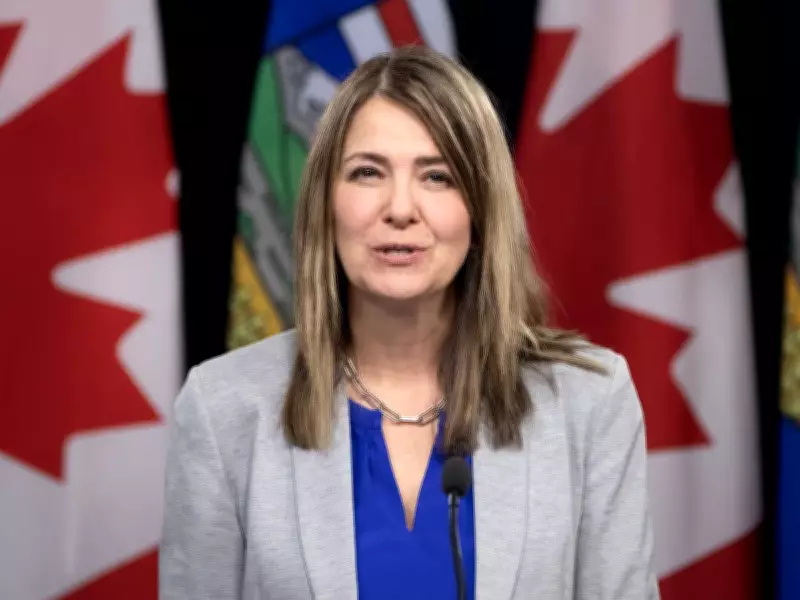
Alberta Premier Danielle Smith has issued a stark warning about the potential consequences of a federal initiative to significantly expand protected lands across Canada. Smith argues that the plan, which aims to more than double conserved areas, could inadvertently lead to an increase in devastating wildfires.
Premier Smith's Radio Show Remarks
During her weekend radio program, Premier Smith made it clear that Alberta will not participate in the federal government's recently announced conservation push. She expressed skepticism about wildfire management practices within federally protected zones, suggesting they have been inadequate in the past.
"We don't think that the only way to manage landscapes is to build a fence around it, allow it to grow so old that all the vegetation becomes thick and dense and a fire hazard, and then wait for it to burn down," Smith stated emphatically.

She specifically pointed to Parks Canada's management approach as problematic, linking it to destructive fires in locations like Waterton Lakes and Jasper National Park in 2024.
The Federal 30x30 Initiative
Prime Minister Mark Carney announced in late March that Canada would align with the United Nations' 30x30 target, which seeks to protect at least 30 percent of the planet's lands and oceans by 2030. As part of this commitment, Carney pledged to safeguard an additional 1.6 million square kilometres of land over the next four years.
This ambitious expansion would more than double the current protected land area of 1.4 million square kilometres. The plan also includes protecting up to 700,000 square kilometres of ocean waters and establishing at least 10 new national parks along with up to 15 national urban parks, supported by a $3.8-billion nature strategy.
Alberta's Alternative Approach
Premier Smith advocates for what she describes as a successful made-in-Alberta model of mixed-use land conservation. She emphasized that the province already considers 60 percent of its territory as protected under its own definitions.
"We use not only cattle ranching as a way of managing our grasslands but also forestry to manage our forestry landscapes and keep them healthy," Smith explained.
She highlighted that strategic thinning of old-growth forests and planting new trees creates natural firebreaks, which she believes are more effective than simply fencing off areas.
"I reject the federal government's view that just build a fence around it and that's protected," Smith declared. "No, some of these landscapes actually have to be actively managed."
Provincial Jurisdiction Assertion
Smith's comments follow a statement from Alberta Environment Minister Grant Hunter, who asserted provincial jurisdiction over land management in response to Carney's 30x30 announcement. Hunter emphasized that conservation efforts must respect provincial authority and existing outcomes.
"As the federal government advances national conservation targets, Alberta expects full recognition of provincial jurisdiction and existing outcomes. Conservation in Canada will not succeed through one-size-fits-all approaches," Hunter wrote.
The provincial statement noted that four percent of Alberta's protected lands are considered "working landscapes" where agricultural, ranching, or forestry activities continue, underscoring the province's preference for active land management over passive preservation.