Toronto Public Health is warning the public about potential measles exposures at three health-care facilities in Scarborough, Ontario, linked to a travel-related case. Officials urge parents of infants under one year old to contact Toronto Public Health or 311 immediately, as they may be eligible for immunoglobulin treatment to prevent infection.
Exposure sites and times
The possible exposures occurred between June 28 and 30 at the following locations: Scarborough Health Network’s General Hospital emergency waiting room at 3050 Lawrence Ave. E. on June 28 from 7 a.m. to 1:30 p.m.; Markington Family Care and Walk-in Clinic at 3227 Eglinton Ave. E. on June 29 from 9 a.m. to 3 p.m.; and Scarborough Health Network’s General Hospital Kids Outpatient Clinic at 3050 Eglinton Ave. E. on June 30 from 8 a.m. to 3 p.m.
Measles resurgence and vaccination
Measles is highly contagious and spreads through the air when an infected person breathes, coughs, or sneezes. The virus can survive in the air or on surfaces for up to two hours. Although vaccine-preventable, measles has resurged in recent years. Canada lost its measles-elimination status from the Pan American Health Organization in November 2025, following a multi-jurisdictional outbreak that began in October 2024, with 10 of 13 provinces and territories reporting cases. Toronto Public Health has confirmed five measles cases this year linked to travel outside Canada. Peel Region also warned of a possible exposure last month on a flight from Ethiopia to Pearson International Airport.

Advice for the public
Officials advise checking vaccination records for measles protection. Anyone who did not receive two doses of the vaccine or has not had the virus is at risk. People born in 1970 or later require two doses for best protection if they have not had the virus, while those born before 1970 may have natural immunity. “Anyone unsure about their vaccination status who is one year of age and older can safely receive the measles, mumps and rubella (MMR) vaccine,” officials said. A blood test can also determine immunity.
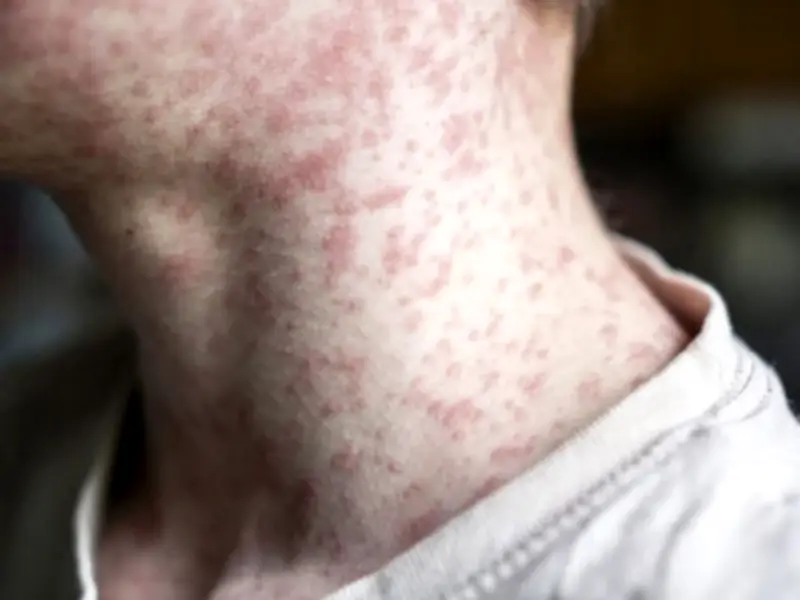
Symptoms to monitor until July 21 include fever, runny nose, cough, red eyes, and a red rash that begins on the face and spreads down the body. Blue-white spots may appear inside the mouth and throat. If symptoms develop, contact a health-care provider immediately, including before visiting a facility, to mitigate spread.