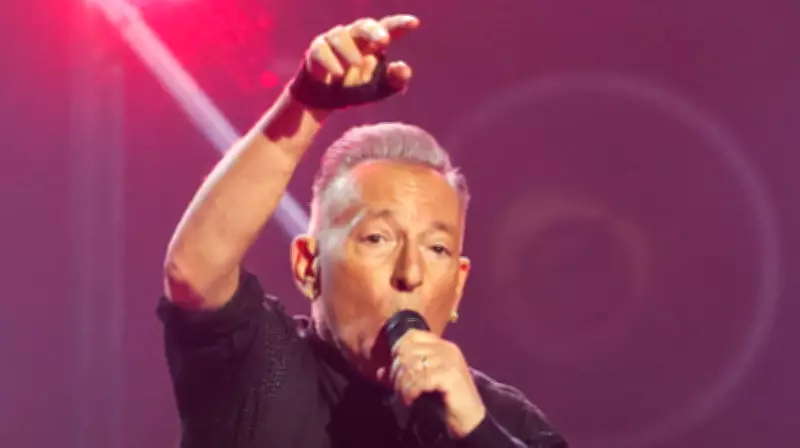
Rock legend Bruce Springsteen launched his highly anticipated Land of Hope and Dreams American Tour with a powerful and politically charged performance in Minneapolis on Tuesday night, delivering a blunt and unflinching message aimed directly at President Donald Trump and his administration.
A Stark Opening Statement
Addressing the cheering audience at the outset of the show, Springsteen did not mince words. "The America that I love, the America that I’ve written about for 50 years, that’s been a beacon of hope and liberty around the world, is currently in the hands of a corrupt, incompetent, racist, reckless and treasonous administration," he declared, setting a defiant tone for the evening. His opening remarks were met with enthusiastic applause from the crowd, signaling strong support for his stance.
Call to Action and Musical Protest
Springsteen urged the audience to embrace "resistance over complacency, unity over division and peace over war," with the final word seamlessly transitioning into a rousing cover of The Temptations' classic protest song, "War." This was immediately followed by his own iconic 1984 hit, "Born In The U.S.A.," a track often misinterpreted but here reclaimed as a statement on American identity and struggle.

Later in the nearly three-hour-long concert, the musician intensified his critique, accusing Trump and his "corrupt White House" of transforming the United States into what he described as a "reckless, unpredictable, predatory rogue nation." He emphasized the urgency of the moment by repeating, "This is happening now," throughout his comments, underscoring the immediacy of his concerns.
Specific Allegations and Broader Criticisms
According to reports from Variety, Springsteen expanded on his accusations, slamming Trump for waging an "unconstitutional and illegal war," for "abandoning NATO," and for threatening "our neighbors and our allies." He also took aim at efforts to revise historical narratives, stating, "Our museums are being told to whitewash American history of any unpleasant or inconvenient facts like the full history of the brutality of slavery. You want to talk about snowflakes? We have a president who can’t handle the truth."
His criticism extended to Attorney General Pam Bondi, whom he accused of "prosecuting our president’s perceived enemies, covering up for his misdeeds, and protecting his powerful friends." This multifaceted attack highlighted Springsteen's deep-seated opposition to the administration's actions and policies.
Musical Collaborations and Historical Context
The show featured a special guest appearance by Rage Against the Machine guitarist Tom Morello, adding an extra layer of rebellious energy to the performance. This collaboration underscored the concert's theme of protest and solidarity.
Springsteen's outspokenness is not new; he has a history of getting under Trump's skin. Last year, after Springsteen criticized Trump during a European tour, the president responded with a social media meltdown, attacking the musician as "a pushy, obnoxious JERK" and a "dried out 'prune,'" while demanding he "KEEP HIS MOUTH SHUT." Springsteen has defiantly continued to speak out, releasing the anthemic protest song "Streets of Minneapolis" earlier this year. The song was inspired by the fatal shootings of Alex Pretti and Renee Good, two Americans protesting Trump's violent immigration crackdown in the city.
Tour Significance and Future Plans
The Land of Hope and Dreams American Tour, which opened in Minneapolis, is set to conclude in Washington, D.C., in May, bringing Springsteen's message directly to Trump's doorstep. This strategic choice amplifies the tour's political resonance, turning it into a moving platform for dissent and advocacy.
Throughout the evening, Springsteen's performance was not just a concert but a rallying cry, blending music with activism to challenge the current political landscape. His unwavering commitment to using his art as a tool for social commentary continues to resonate with fans and critics alike, solidifying his role as a vocal and influential figure in contemporary American discourse.