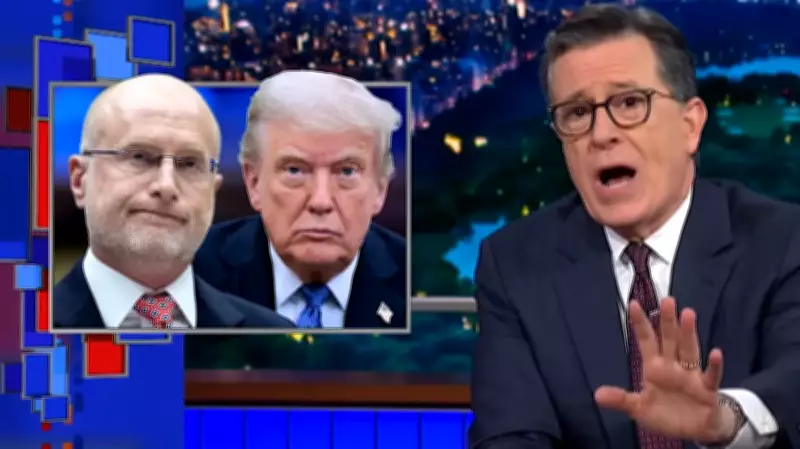
In a fiery monologue on Monday night, "Late Show" host Stephen Colbert launched a scathing attack on his future former employer, CBS, accusing the network of capitulating to Federal Communications Commission (FCC) threats by canceling a scheduled interview with Texas state Representative and U.S. Senate candidate James Talarico, a Democrat. Colbert revealed that network lawyers directly intervened, forbidding him from featuring Talarico on the broadcast, a move that drew loud boos from his audience.
Network Censorship and FCC Pressure
Colbert detailed how the FCC, under Chair Brendan Carr, is threatening to enforce equal time regulations for TV talk shows, which have historically been exempt from such rules. "He was supposed to be here, but we were told in no uncertain terms by our network’s lawyers ― who called us directly ― that we could not have him on the broadcast," Colbert stated. He added that CBS further restricted him from even discussing the cancellation on air, prompting him to defiantly address the issue: "And because my network clearly doesn’t want us to talk about this, let’s talk about this."
Political Motives and Regulatory Hypocrisy
Colbert argued that the FCC's proposal, which would require talk shows to offer equal time to all candidates in a race if they interview one, is politically motivated. "Let’s just call this what it is: Donald Trump’s administration wants to silence anyone who says anything bad about Trump on TV because all Trump does is watch TV," he quipped, comparing the former president to a cranky toddler. Notably, Colbert pointed out that Carr's plan does not apply to right-wing talk radio, despite the FCC's regulatory authority over radio broadcasts, highlighting what he sees as hypocrisy.

CBS's Financial Justifications and Merger Context
Turning his ire toward CBS, Colbert criticized the network for preemptively enforcing the FCC's unenacted proposal. "He hasn’t done away with it yet, but my network is unilaterally enforcing it as if he had... but I want to assure you, this decision is for purely financial reasons," he said sarcastically. This remark referenced CBS's cancellation of "The Late Show" last summer, which the network claimed was a financial decision, coinciding with Paramount's merger that required FCC approval. The merger was approved just one week after the cancellation announcement, raising questions about the timing and motives.
Alternative Platform and Ongoing Controversy
Despite the CBS ban, Colbert conducted the interview with Talarico and posted it on his YouTube channel. However, he noted that CBS prohibited him from mentioning the URL or displaying a QR code to direct viewers to the video. Colbert's final show is set for May 21, adding urgency to his criticisms. The incident underscores broader debates about media censorship, regulatory overreach, and the intersection of politics and entertainment in today's polarized climate.