Iran Reverses Hormuz Strait Reopening After Attacks on Commercial Ships
London — Iran's temporary reopening of the strategic Strait of Hormuz to commercial traffic ended abruptly on Saturday after reported attacks on vessels, with the Iranian military announcing it would resume strict control over the crucial waterway. The reversal came during a ceasefire in the broader Middle East conflict, as Iran protested an ongoing U.S. naval counter-blockade of the route.
Limited Traffic During Brief Opening
During the short-lived reopening, tracking data from firm Kpler indicated that at least eight oil and gas tankers managed to cross the strait early Saturday following Iran's Friday afternoon announcement. However, the situation quickly deteriorated as other vessels encountered problems.
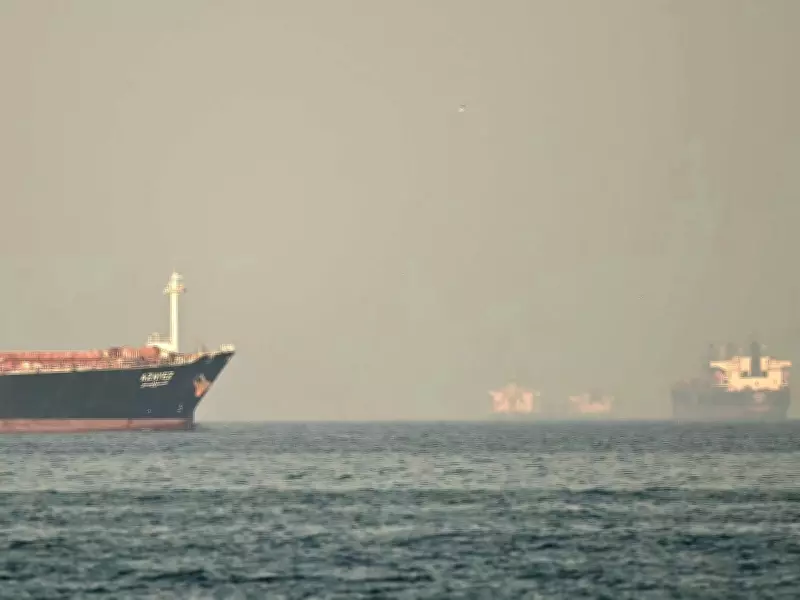
MarineTraffic tracking platform showed several crude oil tankers approached the strait but then turned back near Iran's Larak Island checkpoint, where Iranian forces have maintained a blockade of the passage. Additionally, four French-owned container ships operated by major shipping firm CMA CGM executed U-turns in the strait on Saturday after initially beginning to exit.

Attacks on Commercial Vessels
The U.K. Maritime Trade Operations Centre reported that gunboats belonging to Iran's Revolutionary Guards Corps fired on a tanker in the strait northeast of Oman. According to their online statement, "Tanker and crew are reported safe. Authorities are investigating."
Later, UKMTO received another report concerning a container ship in the same area that was "hit by an unknown projectile which caused damage to some of the containers" though no fire resulted from the incident. These attacks occurred despite the supposed reopening of the passage.
Strategic Importance and Economic Impact
The Strait of Hormuz represents one of the world's most critical maritime chokepoints, with approximately one-fifth of global oil and liquefied natural gas passing through during peacetime. Since the outbreak of war on February 28 with U.S. and Israeli strikes on Iran, traffic through the route has nearly ceased entirely.
Iranian forces' closure of the strait has trapped hundreds of ships in the Gulf and driven up both oil prices and shipping costs significantly. Many captains have been avoiding the region entirely due to fears of attacks or mines.
Iran's Official Reversal
Iran's central military command announced on Saturday that it would resume "strict management" of the strait because of the continued U.S. naval counter-blockade, effectively reversing the decision to reopen the route to commercial traffic. This move came despite the brief window of opportunity that had allowed some vessels to transit.
Notably, at least three of the vessels tracked exiting via the strait on Saturday were listed as being under U.S. sanctions, highlighting the complex geopolitical dimensions of the situation.
Passenger Vessels Also Affected
MarineTraffic indicated that the cruise ship Celestyal Discovery became the first passenger vessel to transit the strait since the conflict began, crossing close to the coast of Oman on Friday afternoon after being docked for approximately 47 days in the United Arab Emirates. The tracking platform noted that "reports indicate the vessel is sailing without passengers."
At least two other passenger ships appeared on tracking platforms passing the strait near Oman on Saturday, though the shipping industry had reacted cautiously to the initial reopening announcement on Friday given the volatile security situation.
The renewed closure and attacks on commercial shipping underscore the ongoing instability in the region and its significant implications for global energy markets and maritime trade.