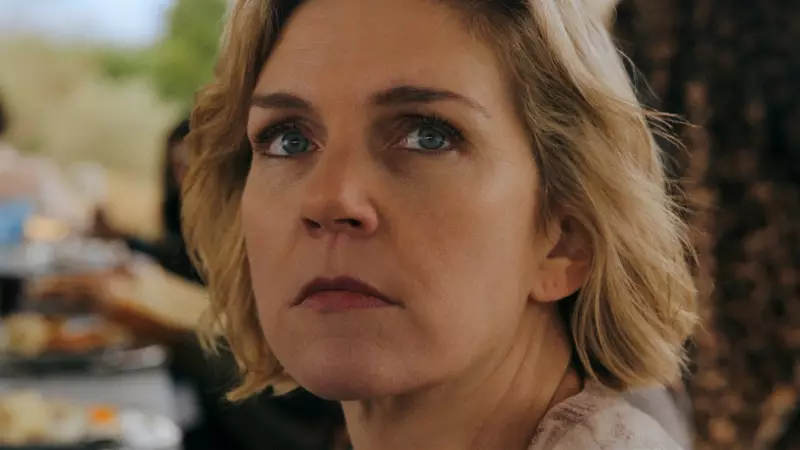
Actress Rhea Seehorn is commanding the awards season spotlight for her riveting performance in the Apple TV+ science fiction series "Pluribus." The acclaimed star, best known for "Better Call Saul," recently secured the Golden Globe for Best Performance By A Female Actor In A Television Series - Drama on Sunday night. This prestigious win follows her Critics’ Choice Award for Best Actress in a Drama Series earlier in the month, solidifying her standout role in one of the year's most talked-about shows.
The Unsettling World of Pluribus
Created by Vince Gilligan, the mastermind behind "Breaking Bad" and "Better Call Saul," "Pluribus" presents a deeply unsettling premise. An alien virus sweeps across the planet, assimilating nearly all of humanity into a single collective consciousness known as the hivemind. Only 13 people worldwide are immune, left as solitary remnants of a vanished world. Seehorn portrays Carol Sturka, a woman who loses her wife, Helen (Miriam Shor), during the global transformation. While some of the immune adjust to their new reality, Carol defiantly rejects it.
The hivemind's response to Carol's resistance is not aggression, but a disturbing form of accommodation. It assigns her a constant companion named Zosia, played by Karolina Wydra. Zosia is eerily calm, impeccably composed, and bears a striking resemblance to a character from Carol's own bestselling books. Her purpose is to manage Carol's life and anticipate her every need, representing the hive's alien concept of kindness toward the survivors.

The Horror of Perfect Comfort
The series captivated audiences not with simple special effects, but with its profound philosophical tension. The hivemind offers a seductive promise: singularity, eternal bliss, and the end of all suffering. There is no war, hunger, loneliness, or deceit. It provides the immune survivors with anything they desire—comfort, safety, pleasure, or even extreme power. The true horror of "Pluribus" lies in this perfect, frictionless existence, where the cost is the complete surrender of individual identity.
The core conflict of the show forces characters and viewers alike to confront a terrible choice. Is it better to join the hive and gain eternal peace at the cost of your self? Or do you live as a pampered but isolated relic in a hollow world? Perhaps the only alternative is to fight to restore flawed, messy humanity with all its pain and beauty. None of the options feel purely heroic, making the show's dilemmas linger long after viewing.
Echoes of Our AI-Driven Reality
While creator Vince Gilligan notes the concept was developed years before the current AI boom, the parallels to artificial intelligence are unmistakable. In an interview with Polygon, Gilligan stated he wasn't directly responding to AI like ChatGPT, but he welcomes viewers drawing their own connections. The show mirrors contemporary anxieties: as AI increasingly perfects and generates our words, images, and even idealized human forms, what are we trading away?
The hivemind's pitch is efficiency and ease—why struggle when a collective intelligence can do it better? This mirrors the promise of advanced AI. "Pluribus" ultimately serves as a mirror, asking a chilling question: if the world worked perfectly for us, fulfilling every desire, would we still recognize ourselves? And if we lost that sense of self in the process, would we even care?
With its award-winning lead performance and thought-provoking narrative, "Pluribus" is available for streaming exclusively on Apple TV+.