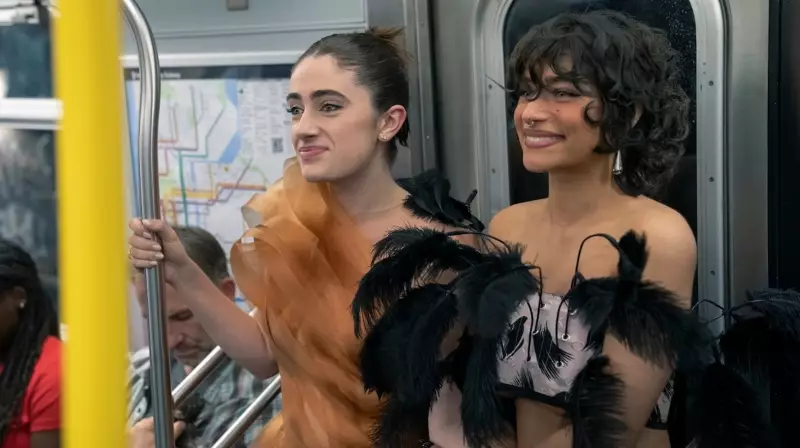
Several weeks after the debut season of HBO's "I Love LA" concluded, its thoughtful exploration of modern queer identity continues to resonate. The series, which was renewed for a second season last November, follows a group of ambitious, social-media-savvy zillennials navigating the cutthroat entertainment industry of Los Angeles. While it tackles universal themes of friendship and the anxieties of early adulthood, the show delivers a particularly significant commentary on contemporary LGBTQ+ representation through one standout character.
Tallulah's Story: Beyond the Rainbow Logo
The character of Tallulah, portrayed by Odessa A'zion, is an influencer who relocates from New York to LA to join her best friend and manager, Maia (Rachel Sennott). A pivotal moment occurs in Episode 6, when Tallulah lands a role in a Ritz Crackers advertisement. Maia casually mentions to the brand's executives that her client is bisexual, prompting an overzealous reaction. The resulting ad campaign features a mural of Tallulah surrounded by rainbow-colored crackers and the slogan "Ritz supports LGBTQ+ storytellers."
Tallulah's horror at this portrayal is a nuanced and powerful story point. She is not closeted, yet the corporation's celebration of her queerness feels inauthentic and reductive. The scene brilliantly critiques the modern practice of corporate tokenization, where LGBTQ+ identity is commodified for brand appeal without genuine understanding. For Tallulah, her sexuality is simply one facet of her complex identity, not a marketing tool or a defining characteristic she leads with every day.

The Right to Exist Beyond a Caricature
This storyline speaks to a growing sentiment within the queer community, especially among younger generations. It highlights the desire to exist authentically without having one's identity fetishized, stereotyped, or turned into a templated corporate symbol. The episode underscores that not all queer people are comfortable with their identity being packaged and sold, a feeling amplified by the knowledge that many companies abandon LGBTQ+ support when it is no longer commercially convenient.
The show also acknowledges the privilege inherent in Tallulah's ability to keep her sexuality "low-key." She lives in a supportive environment where her friends accept her queerness as a simple fact. However, her experience resonates with many viewers who don't fit the extroverted, perpetually "fabulous" gay best friend trope often seen in media. "I Love LA" provides refreshing visibility for introverted, multifaceted queer individuals whose identities are not their sole narrative focus.
A Deliciously Subversive Conclusion
The episode's conclusion masterfully highlights societal contradictions. In a defiant act, Tallulah and her girlfriend, Tessa, throw white paint over the corporate mural. The ironic twist comes when their friends receive a phone alert about an "LGBTQ hate crime" in the area, referencing the vandalized ad. This hilarious moment critiques our culture's simultaneous obsession with queer hypervisibility and its compulsion to frame LGBTQ+ people as perpetual victims.
This snapshot of existence—complex, defiant, and refusing to be pigeonholed—is precisely the kind of nuanced storytelling that zillennial audiences are craving. "I Love LA" moves beyond simplistic representation, offering a witty and relatable examination of what it means to be queer in a world obsessed with labels, branding, and easy narratives.