The Witch Reimagined: Feminine Power as Protector and Healer
In the cultural landscape leading up to the 2026 Academy Awards, a profound transformation of the witch archetype is taking center stage. No longer merely a figure of fear or malevolence, the contemporary witch emerges as a protector and nurturer, deeply rooted in the Earth and guided by feminine instincts. This evolution is powerfully embodied in recent award-winning performances that challenge conventional narratives and offer urgent commentary on our current societal moment.
BAFTA Recognition for Groundbreaking Performances
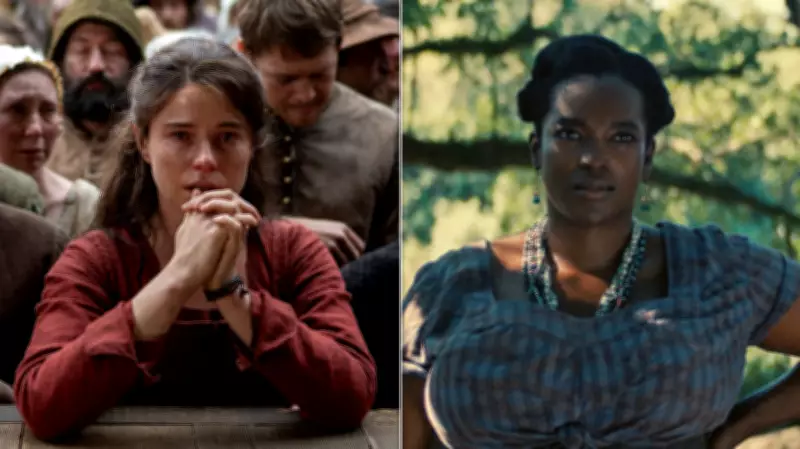
At this year's British Academy Film Awards, both Wunmi Mosaku for Sinners and Jessie Buckley for Hamnet received honors for portraying women whose power has historically been misunderstood and feared. These characters represent a departure from traditional witch tropes, instead presenting feminine authority as something derived from grief, sensitivity, and profound connection to the natural world.
In Chloé Zhao's adaptation of Maggie O'Farrell's bestselling novel Hamnet, Buckley portrays Agnes, a woman whose strength emerges from her deep bond with nature and her willingness to trust her instincts. Set against the backdrop of Elizabethan England, Agnes navigates a world that views her connection to the natural order as suspicious and unconventional.

Meanwhile, in Ryan Coogler's Sinners, set in the Mississippi Delta during the Jim Crow era, Mosaku embodies Annie, a hoodoo priestess who moves between realms with maternal depth and sacrificial devotion. Both characters share a refusal to abandon their knowledge and intuition despite societal pressures to conform.
The Raw Power of Feminine Instinct
There is an immediate, visceral quality to both performances that has proven unsettling to some viewers, particularly men. This discomfort speaks to the enduring threat that authentic feminine power represents within patriarchal structures. As one observer noted, growing up in urban environments often meant that connections to instinct and nature were viewed as peculiar or inconvenient, especially when expressed by women.
We live in a society characterized by patriarchal dominance, endless conflicts, and environmental degradation, where women's rights and personal agency face constant challenges. In this context, the refusal of these characters to abandon instinct in favor of convention becomes particularly resonant. Their willingness to be feared and dismissed while remaining faithful to their beliefs offers a powerful guide for contemporary existence.
Agnes: The Forest Witch's Daughter
In Hamnet, set in Stratford-upon-Avon and filmed in the bucolic English countryside, Agnes emerges through Buckley's mesmerizing performance as a woman deeply connected to natural cycles. She literally emerges from the womb of a gnarled ancient tree, receiving gifts from the natural world that surrounds her. Her relationship with a hawk symbolizes her attunement to environmental cues that others ignore.
Agnes faces constant judgment as the daughter of a forest witch, referred to disparagingly as a Gypsy and treated as an outsider. Her domestic existence involves constant struggle with basic survival, where nature serves as both friend and foe. When she meets William Shakespeare, portrayed by Paul Mescal as a struggling tutor and playwright, their relationship brings love but also demands compromise and hardship.
Yet Agnes centers herself in a world of her own making: her ancient tree, her hawk, the children she fiercely protects. She gathers nourishment from the forest and waits patiently for answers. In a society that demands women shrink and comply, Agnes simply refuses. Her resilience lies in inherited sensitivity and instincts passed mother to daughter through generations.
This inheritance becomes particularly evident in birthing scenes where Agnes calls out for her own mother and revives her seemingly stillborn daughter through touch and instinct. When she lets out a primal wail during childbirth, it becomes a cry for all humanity's disconnection from life-giving forces. Later, when plague strikes and she loses her beloved son Hamnet despite her most desperate efforts, her grief reflects the raw power of feminine experience that refuses to be silenced.

Annie: The Hoodoo Priestess
In Sinners, Annie carries the Earth's gifts within her as an estranged wife living in relative isolation. Her glass bottles contain potions and cures, and she moves through the film bathed in alternating shadow and light—someone familiar with darkness but constantly seeking illumination. Like Agnes, Annie's power is rooted in what the world has tried to diminish.
Annie herself mourns the loss of an infant daughter, yet she rises into her gifts with hard-fought resilience. She listens to her instincts and relies on them, becoming a vital shield for loved ones threatened by forces beyond their control. When we witness Annie reunited with her baby in a vision, she represents the maternal love and protection that our fractured world desperately needs.
Beyond Familiar Tropes
While popular culture has recently begun to reckon with witchy women—from Amy Madigan's malevolent Aunt Gladys in Weapons to Cynthia Erivo's morally complex Elphaba in Wicked—Agnes and Annie represent a more profound evolution. Their feminine power is depicted not as mere vengeance but as a source for healing, rooted in respect for nature, compassion, and inherited wisdom.
Everywhere we look, women's voices face threats: as mothers, daughters, and partners, they are spoken about, ridiculed, dismissed, separated from children, and disregarded in matters of maternal health. Patriarchal power has harmed the Earth, and as both Agnes and Annie understand, the Earth is the source of everything.
Why These Performances Resonate
Perhaps this understanding explains why audiences are paying such close attention to these performances. What proves so thrilling about both Agnes and Annie is their unwillingness to back down, their unapologetic authenticity. With so few representations of independent, strong women in film, seeing them on screen feels both validating and satisfying.
Viewers see themselves reflected in these characters, and watching them proves empowering because it reminds us of the gifts we all possess. In a time of collapsing systems—environmental, social, and political—feminine power may represent our strongest chance for survival. If we move through the world as Agnes and Annie do, with respect for nature and trust in instinct, we may secure our collective future.
The return of the proverbial witch—aligned with the Earth, with healing, with feminine power—may indeed be the only way forward. Sinners is currently streaming on HBO Max, while Hamnet is available on Peacock, offering viewers the opportunity to witness this cultural transformation firsthand.