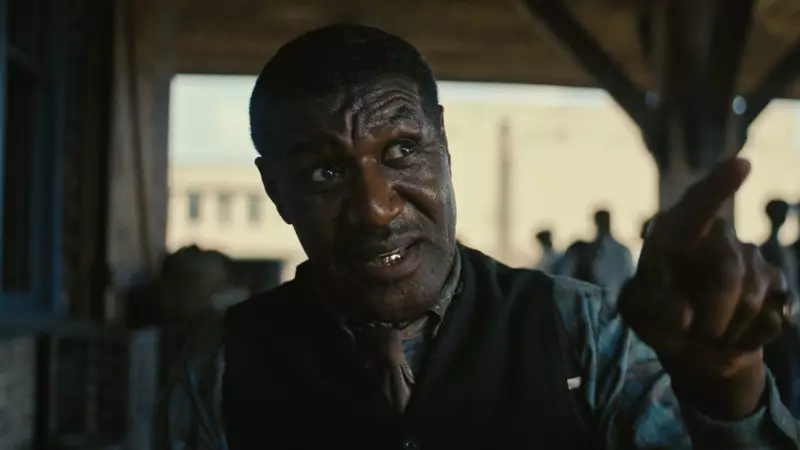
For over five decades, Delroy Lindo has built a career on raw, sincere performances that resonate deeply with audiences. From his iconic roles in Malcolm X and Crooklyn to his recent, celebrated turn as elder bluesman Delta Slim in Ryan Coogler's Sinners, Lindo's work is defined by an unwavering authenticity. Yet, in a candid interview, the 73-year-old actor addressed the complex relationship between artistic impact and industry recognition, following a personal snub in the recent SAG Awards nominations.
The Elephant in the Room: Navigating Awards Season Disappointment
Speaking just hours after learning the nominations for the 32nd SAG Awards were announced, Lindo was refreshingly transparent about his mood. Sinners earned five nominations, including for Best Ensemble and nods to co-stars Michael B. Jordan, Wunmi Mosaku, and Miles Caton. Lindo's name, however, was absent, despite his performance generating significant awards buzz.
"It's kind of like the 300-pound gorilla in the room," Lindo admitted. "You gotta just face it and say, 'Yeah, I'm aware,' and move on." This isn't the actor's first brush with awards season disappointment. Many anticipated an Oscar nomination for his powerful portrayal of a troubled Vietnam veteran in Spike Lee's Da 5 Bloods five years ago, which never materialized.

Lindo emphasized a philosophy that guides him through these moments. "There is a distinct difference between whether one is officially recognized with an award or not, compared to how the work impacts audiences and how it impacts other human beings," he stated. "I value that and I always will, no matter what." He described the ongoing praise for his work in Sinners as "profoundly affirming."
Connecting with Delta Slim: Humanity as the Core Mission
Lindo's immediate connection to the Sinners script was rooted in its exploration of contemporary themes through a period lens. He recognized a story about community infiltration and violation, one that resonated powerfully with today's world. For Lindo, the core of his craft is always finding the humanity in a character.
"Much of it was laid out on the page," Lindo said of developing Delta Slim. A key clue was found in the now-iconic three-page car monologue, which explains the character's trauma and his self-medication with liquor. "I then had the opportunity... to explain part of my origin story and, hopefully, explain to the audience what the basis of my self-medicating is."
One creative challenge Lindo proactively addressed with director Ryan Coogler was ensuring Delta Slim didn't disappear in the film's second act. "I said to Ryan, 'I fall off in the second act. Is there a way we can maintain or beef up my presence?'" Coogler agreed to work on it, leading to the character's heroic, sacrificial arc later in the film—an element not in the original script. Lindo praised Coogler's generosity and collaborative spirit.
The Cultural Phenomenon and a Mind-Blowing Partnership
Being part of a film that has become a cultural moment is "really special" for Lindo, especially because he wasn't sure how audiences would receive a Coogler film that wasn't another Black Panther sequel. The fact that it has been embraced on its own terms feels "pretty amazing."
Lindo reserves particular admiration for the creative partnership between Ryan Coogler and Michael B. Jordan. He reflected on the global impact of their collaborations, from Fruitvale Station and Creed to the Black Panther films and now Sinners.
"Each of those achievements are monumental in their own right... Acknowledging that, recognizing that, it's mind-blowing, particularly as young men," Lindo said. He highlighted the importance of these narratives in presenting Black characters in all their humanity and complexity, a through-line in Coogler's work that deeply resonates with him.
Reflecting on the intense car monologue scene, Lindo shared that his focus was on the technical execution of modulating the three-page speech. The emotional, improvised conclusion, however, was "entirely organic to the moment." He credited his co-stars in the scene for being "right there with me."

Ultimately, for Delroy Lindo, the journey continues to be about the human connection forged through his art. The audience's affirmation, he concludes, "make[s] the journey that much easier."