Cinerama's Spectacular Arrival in Vancouver Transformed Cinema Forever
When Cinerama made its grand debut in Vancouver on March 7, 1958, the anticipation reached unprecedented levels. Newspaper advertisements in The Vancouver Sun and Province proclaimed it as "THE GREATEST ENTERTAINMENT HUMAN EYES HAVE EVER SEEN — HUMAN EARS HAVE EVER HEARD," setting expectations sky-high for what would become a landmark moment in cinematic history.
More Than Just a Novelty: Cinerama's Revolutionary Approach
Cinerama represented a fundamental shift in how audiences experienced motion pictures. Unlike traditional cinema, Cinerama promised to place viewers directly within the action through its innovative technical specifications. The system utilized three synchronized 35mm cameras equipped with 27mm lenses that replicated the human eye's focal length, capturing a remarkable 146-degree horizontal arc of vision.
According to film historian Ben Rowe of the Calgary Cinematheque, "These three interlocked cameras filmed simultaneously to produce three film prints that would be projected in synchronization by three projectors." This created a wide-screen image with three times the image fidelity of conventional single-strip films, while seven stereo audio tracks replaced the mono sound typical of 1950s cinema.

The Immersive Experience That Captivated Audiences
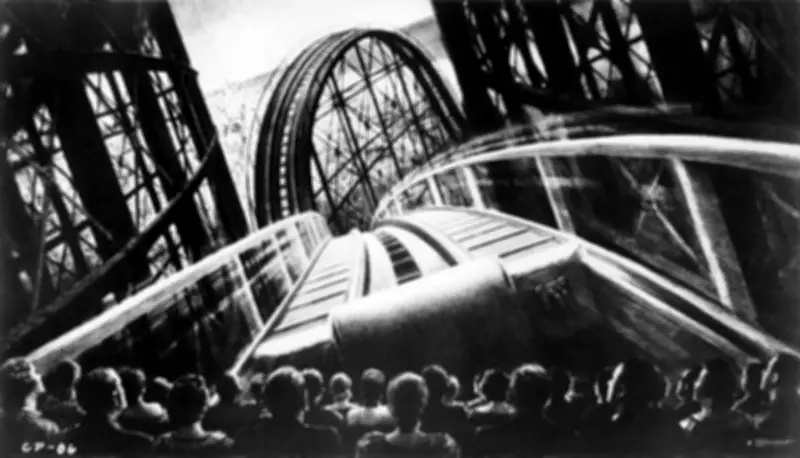
The inaugural Cinerama production, This Is Cinerama, premiered in Seattle on August 24, 1956, and set the standard for what was possible. This two-hour travelogue transported viewers to exotic locations worldwide through breathtaking sequences that included roller-coaster rides, water-skiing in the Everglades, and aerial tours over Niagara Falls and the Grand Canyon.
Les Wedman of The Province described the visceral impact: "When the camera goes for a roller-coaster ride, you're right with it, and if your stomach doesn't do a slow roll, and your lips let loose some fast screams, you're just not human." He noted that the water-skiing and flying sequences delivered effects that felt like "the real McCoy."
The Visionary Behind the Technology
Fred Waller, the inventor of Cinerama, had previously demonstrated his innovative spirit by patenting the first water-skis in 1925. His cinematic creation aimed to deliver what he described as "a real, physical, emotional experience" rather than mere visual entertainment. As reported in a September 29, 1952 wire story by Richard Kleiner following Cinerama's New York debut, Waller emphasized that "the audience isn't just looking at a picture" but becoming part of the action.
Brett Hart of Hart and Soul Entertainment, who maintains the American Widescreen Museum website, preserves detailed historical records of Cinerama, including promotional illustrations showing audiences completely immersed in giant curved screens displaying thrilling roller-coaster sequences. Contemporary advertisements declared that Cinerama "puts you in the picture" and represented "an entirely new method of human communication" that combined elements of opera, travelogue, and traditional motion pictures.
Lasting Impact on Cinematic Presentation
The curved screens, expansive dimensions, and multi-track audio systems introduced by Cinerama established new standards for theatrical presentation that would influence cinema for decades to come. While the specific three-projector system eventually gave way to more practical technologies, Cinerama's emphasis on immersive, wide-screen experiences paved the way for modern IMAX and other premium large-format presentations that continue to captivate audiences today.
The 1958 Vancouver debut marked a significant moment when British Columbia audiences first experienced this revolutionary approach to film, forever changing expectations about what cinema could deliver in terms of sensory engagement and visual spectacle.