Montreal's St. Patrick's Parade: A 201-Year Legacy of Green Celebration
For three hours this Sunday, downtown Montreal will transform into a vibrant sea of green as the city celebrates one of its founding peoples and welcomes spring with the 201st edition of the St. Patrick's Parade. The procession will travel along De Maisonneuve Boulevard between Guy and St-Urbain Streets, commencing at noon, featuring a spectacular display of floats, marching bands, bagpipers, dancers, and performers that culminates in traditional post-parade festivities.
The Historical Significance of Montreal's Parade
Montreal's St. Patrick's Parade holds the distinction of being the oldest and longest-running celebration of its kind in Canada, with origins dating back to 1824. According to United Irish Societies of Montreal historian Ken Quinn, the parade was initially organized by the Hibernian Society as an expression of Irish pride during a period of significant immigration from Ireland. "It was to express their pride in being Irish," Quinn explained, noting that early participants were either Irish-born or children of Irish immigrants.
The parade also ranks among the oldest St. Patrick's celebrations in North America, with the United Irish Societies of Montreal now responsible for its organization. Over two centuries, this organization has assisted other Canadian cities in establishing their own parades, spreading the tradition across the country.

Evolution of the Parade Route and Direction
Throughout its history, the parade has primarily followed Sherbrooke Street, De Maisonneuve Boulevard, and the iconic Ste-Catherine Street, traditionally moving from west to east. However, in 2019, organizers reversed this pattern when the parade relocated to De Maisonneuve Boulevard, running from east to west for logistical convenience. "I think that it was easier to set up in the eastern part of the city and move west than it was to set up in the western part and move east," Quinn noted regarding this singular directional change.
Following cancellations during the COVID-19 pandemic in 2020 and 2021, the parade returned to Ste-Catherine Street before settling back on De Maisonneuve Boulevard, where it now proceeds eastbound against regular traffic flow. These route adjustments reflect ongoing logistical considerations within Montreal's urban landscape.
From Religious Procession to Multicultural Celebration
The parade has undergone significant transformation since its inception as an expression of Irish identity. Quinn described how the event evolved into a predominantly Catholic procession for approximately a century before gradually shifting away from religious emphasis during Quebec's Quiet Revolution. Today, the celebration has reinvented itself as a multicultural event that unites diverse communities across Montreal.
"It has progressed. It has developed over the years, and I think that's one of the reasons why it has not only survived, but it has thrived for 200 years," Quinn observed. "It has always reinvented itself." This adaptability ensures the parade remains relevant to contemporary Montreal while honoring its historical roots.
A Family Tradition Spanning Generations
The United Irish Societies and the parade itself represent a multigenerational family affair, with many participants tracing their involvement back to ancestors in the original parades. Nikki Picher Doyle, vice-president of advertising and public relations for UIS, emphasized this continuity: "They all somehow date back to somebody who was in the original parades and those families just kind of kept it going through all these years."
This year's grand marshal, Gary McKeown, follows in his father's footsteps, who served as grand marshal in 1998. The 2026 theme, "Little Shamrock, Big Dreams," specifically highlights the passing of traditions through generations, encouraging younger family members to participate in meetings and parade activities. Danny Doyle Jr., the parade's chief deputy marshal who inherited the role from his uncle, described the event as "a tradition" that involves approximately eight family members in various capacities.

The Modern Selection Process for Parade Royalty
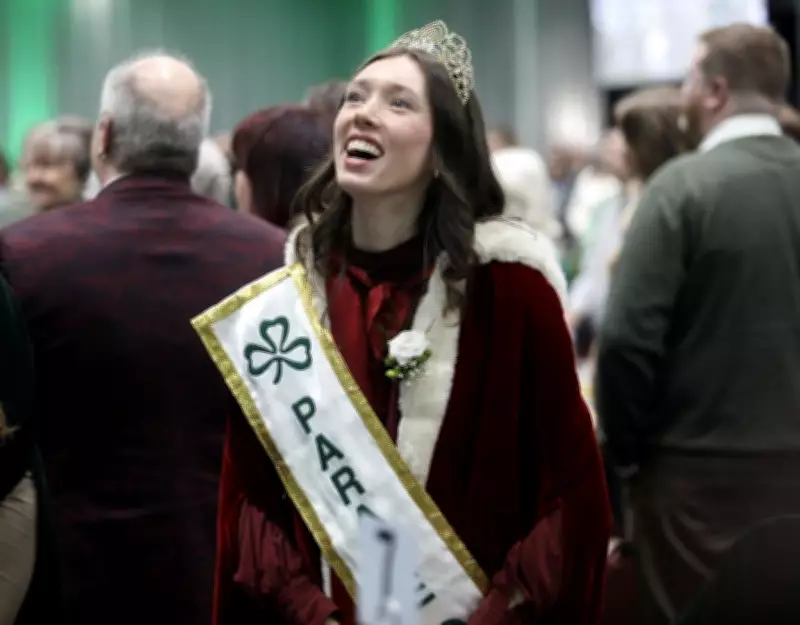
The method for selecting the St. Patrick's Parade queen has evolved significantly from earlier emphasis on beauty and poise to a contemporary public-speaking competition. Sarah Crotty, the 22-year-old 2026 queen, detailed the rigorous three-round selection process that determines both the queen and her court of four princesses.
Candidates first introduce themselves to judges, then research and present on Irish history topics, and finally answer impromptu questions on stage. Crotty's final question addressed engaging younger generations in Montreal's Irish community as the population ages, to which she responded with insights from her experience with the Montreal Shamrocks Gaelic athletics club. "Recruiting new people to keep our club alive is super important," she explained, emphasizing the need to adapt outreach strategies to different communication platforms preferred by various generations.
Crotty, who received the Catherine Polson Memorial Scholarship before being encouraged to pursue the queen role, described the selection evening as "a very unique experience" that created lasting memories for all finalists.
A Unifying Montreal Tradition
This year's parade will feature 92 participating groups, including marching bands, dance troupes, community organizations, cultural associations, parish groups, commercial partners, and historical societies. Parade director Devin St. James emphasized the event's inclusive nature at a City Hall kickoff ceremony: "This is not only an Irish celebration, it is truly a Montreal celebration. People of many cultures, languages, and backgrounds march together each year, making this one of the most inclusive and joyful events in the city's calendar."
As Montreal prepares for another vibrant celebration of Irish heritage and spring's arrival, the St. Patrick's Parade continues to demonstrate how cultural traditions can evolve while maintaining their core identity, bringing together communities across generations and backgrounds in a shared expression of joy and heritage.