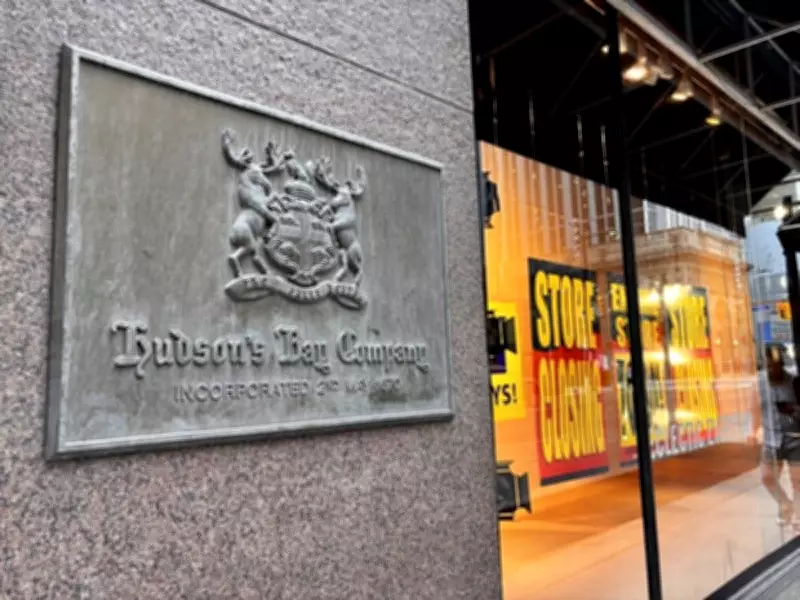
Toronto Removes Hudson's Bay Plaques from Historic Flagship Store, Sparks Heritage Debate
A series of plaques commemorating the Hudson's Bay Company have been removed from the historic building at the corner of Yonge and Queen Streets in downtown Toronto, igniting discussions about heritage preservation and commercial history in Canada's largest city.
Plaques Deemed Without Heritage Value
The City of Toronto has confirmed that while the building itself enjoys heritage protection, the bronze plaques bearing the Hudson's Bay Company name and logo do not share that status. According to city officials, the plaques were installed in 1991 when the building transitioned from housing the Simpsons department store to becoming Hudson's Bay's flagship location.
"The building only became the Bay in 1991 when the Simpsons brand was retired by its parent company the Hudson's Bay Company, which acquired Simpsons in 1978," city hall stated. "The Hudson's Bay commercial bronze signage was installed after this time, replacing Robert Simpson Company signage, and as such do not have heritage value."

Revealing Hidden Retail History
The removal of the Hudson's Bay plaques has unexpectedly uncovered traces of Toronto's retail past. With the modern signage gone, faint outlines of the original Simpsons department store name have become visible against the stone walls, offering a glimpse into the building's commercial evolution.
The building at 176 Yonge Street has served as a retail landmark for over a century. Construction began in 1894 under architect Edmund Burke, featuring Chicago School of Architecture design elements that make it one of Toronto's finest examples of this style. A nine-storey art deco addition followed in 1928, further enhancing the structure's architectural significance.
Building's Protected Status Remains Intact
City officials emphasized that the building's heritage designation remains unaffected by the plaque removal. The structure was designated under the Ontario Heritage Act in 1976, two years before Hudson's Bay Company acquired the property. Additional heritage plaques from 1979 and 1998 continue to adorn the building's exterior.
Chris Moise, the city councillor representing the ward containing the former Bay store, described the building as having "a storied history" and confirmed he's working with property owner Cadillac Fairview to preserve that history appropriately while allowing future tenants to display their own signage.
Social Media Reaction and Public Concern
The plaque removal has generated significant attention on social media platforms, with prominent Ontarians expressing concern about the decision. Shopify president Harley Finkelstein questioned the removal on X, asking "Who is calling for this removal?" and expressing interest in purchasing the signage to display it for entrepreneurs.
Former MPP Lisa MacLeod also voiced concerns about the decision, reflecting broader public interest in preserving commercial heritage markers in Toronto's evolving urban landscape.
Technical Considerations and Future Plans
City officials noted that their primary concern during the removal process involved ensuring proper conservation techniques were used to repair any holes left by the plaques. This precaution prevents water and dirt accumulation that could cause deterioration before future tenants propose new signage.
The building housed Hudson's Bay's flagship department store until spring 2025, when the retailer closed its remaining locations. The plaques themselves remain property of Hudson's Bay Company and its successors, according to city hall.
This development follows earlier concerns about another commemorative plaque that honored Bay and Simpsons employees who died during the Second World War. That plaque has reportedly been donated to the Royal Canadian Legion for preservation.
The debate highlights ongoing tensions between commercial development, architectural preservation, and public sentiment regarding historical markers in Toronto's rapidly changing downtown core.