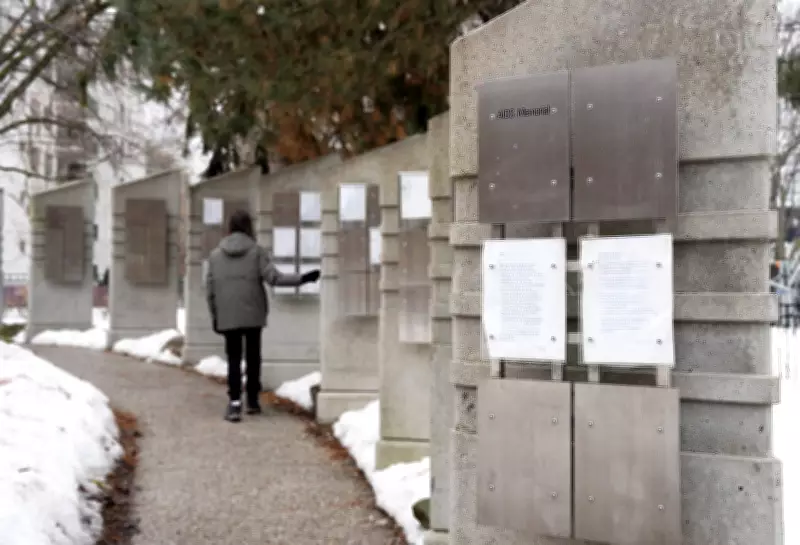
Toronto's AIDS Memorial at Risk as City Moves Forward with Park Redesign
In the heart of Toronto's vibrant Church and Wellesley neighborhood, a solemn tribute stands as a beacon of remembrance and resilience. The AIDS memorial in Barbara Hall Park, a cherished site for the city's HIV/AIDS community, now faces an uncertain future due to impending city-led renovation plans. Advocates and community leaders are raising alarms, fearing that the memorial's significance may be diminished or lost entirely in the redesign process.
A Symbol of Loss and Legacy Under Threat
David, a prominent figure leading a coalition of HIV/AIDS organizations, recently highlighted the grave concerns surrounding the planned changes. "This memorial is not just a structure; it's a sacred space where we honor those we've lost and celebrate the ongoing fight against HIV/AIDS," he stated during a recent visit to the site. The memorial, which has served as a focal point for vigils, education, and community gatherings for decades, is integral to Toronto's cultural and social fabric.
The city's renovation plans for Barbara Hall Park, part of broader urban renewal efforts, include updates to landscaping, pathways, and public amenities. While officials have stated that the intent is to enhance the park's accessibility and usability, details about the memorial's preservation remain vague. Advocates worry that without explicit guarantees, the memorial could be altered, relocated, or even removed, erasing a critical piece of Toronto's history.

Community Mobilizes to Protect a Vital Landmark
The potential loss of the AIDS memorial has sparked a wave of activism within Toronto's LGBTQ+ and health advocacy circles. Organizations are calling for:
- Transparent consultation with stakeholders, including survivors, families, and advocacy groups.
- Clear commitments from the city to maintain the memorial's integrity and prominence in any redesign.
- Increased public awareness about the memorial's historical and emotional significance.
As David emphasized, "We cannot allow this memorial to fade into obscurity. It represents decades of struggle, love, and remembrance. The city must recognize its value and ensure it remains a cornerstone of our community." The memorial not only commemorates those lost to AIDS but also serves as a testament to the activism and compassion that have defined Toronto's response to the epidemic.
Balancing Progress with Preservation
City officials have acknowledged the concerns but have yet to provide concrete assurances. In statements, they have emphasized that park renovations aim to create a more inclusive and functional space for all residents. However, the lack of specific plans for the memorial has left many feeling anxious and unheard.
The situation underscores a broader challenge faced by cities worldwide: how to modernize urban spaces while honoring historical and cultural landmarks. For Toronto, the AIDS memorial is a poignant reminder of the devastating impact of the HIV/AIDS crisis and the community's unwavering solidarity. Its potential alteration raises questions about how cities prioritize memory and identity in the face of development.
As discussions continue, advocates remain vigilant, urging the city to adopt a collaborative approach. They argue that preserving the memorial is not just about maintaining a physical structure but about upholding the values of empathy, remembrance, and social justice that it embodies. The outcome of this debate will likely set a precedent for how Toronto balances growth with the preservation of its diverse heritage.