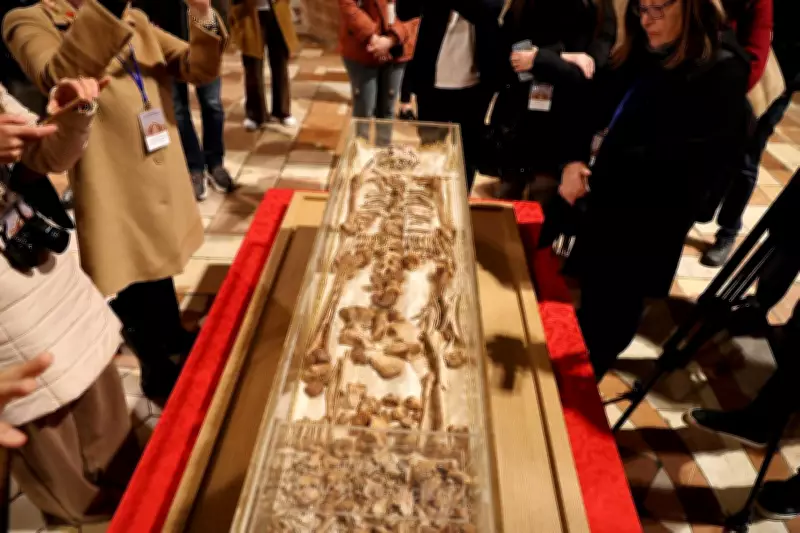
Skeleton of St. Francis of Assisi Goes on Public Display for First Time
The skeletal remains of St. Francis of Assisi, one of the most venerated figures in Catholic history, are being exhibited to the public for the very first time. This unprecedented display offers a unique opportunity for devotees, historians, and the general public to view the relics of the saint who founded the Franciscan Order and is renowned for his devotion to poverty, peace, and nature.
Historical Significance and Public Access
The exhibition, which began recently, will continue until March 22, 2026, providing an extended period for visitors to witness this rare historical artifact. St. Francis, who lived from 1181 to 1226, is a pivotal figure in Christianity, known for his teachings on humility and his connection to animals and the environment. His remains have been carefully preserved and are now accessible in a controlled setting that respects both religious sanctity and public interest.
This event marks a significant moment in the preservation and sharing of religious heritage, allowing people to engage directly with a tangible piece of spiritual history. The display is expected to attract thousands of visitors from around the world, highlighting the enduring legacy of St. Francis and his impact on global culture and faith.

Context and Broader Implications
The decision to publicly exhibit the skeleton comes amid a growing trend of making historical and religious artifacts more accessible to the public. It reflects a balance between reverence for sacred objects and the educational value of such exhibitions. Experts note that this could set a precedent for other religious institutions considering similar displays, fostering greater transparency and engagement with their histories.
In addition to the main exhibition, related events and educational programs are likely to be organized to provide deeper insights into the life and teachings of St. Francis. This initiative not only honors his memory but also promotes interfaith dialogue and historical awareness, contributing to a richer understanding of medieval religious movements and their contemporary relevance.