In a poignant ceremony enveloped by ceremonial tobacco smoke, the spiritual essence of Canada's residential school victims was solemnly transferred on Friday from a temporary memorial near Calgary City Hall to a permanent resting place at The Confluence. The smoke mingled with morning fog as Blackfoot prayers and resonant drum beats filled the air, creating a sacred atmosphere before a procession carried the memorial's symbolism four blocks to its new home.
A Healing Journey Rooted in Truth and Respect
"Our healing journey is to love one another and be honest, to respect one another and tell the truth," declared Blackfoot Elder and residential school survivor Jackie Bromley, addressing approximately 200 people gathered at Municipal Plaza. She emphasized the intergenerational connection, stating, "As human beings we did not just arrive here alone, we carry the life experiences of our ancestors so our generation can live our lives in a good way."
A few metres away, a temporary memorial consisting of children's shoes and toys placed in 2021 sat on concrete steps, serving as a powerful reminder of the thousands of Indigenous children who died and were often buried in unmarked graves across Canada. This collection was carefully removed to be replaced by a temporary installation at The Confluence, which will eventually house a permanent tribute to honor these victims.

The Historical Context of Residential Schools
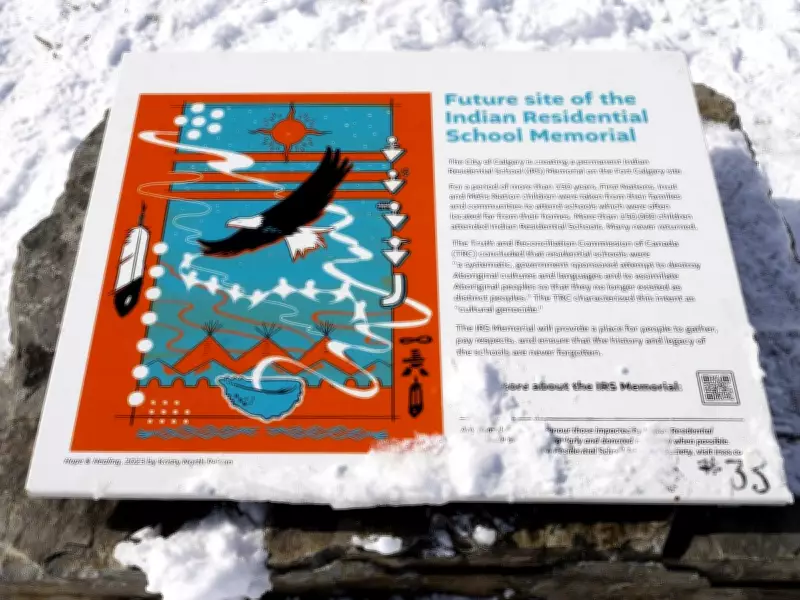
According to the Truth and Reconciliation Commission of Canada (TRC), approximately 150,000 Indigenous children attended residential schools over more than 150 years. These institutions were funded by the federal government and operated by Christian religious organizations with the explicit goal of cultural assimilation.
The TRC characterized this system as "a systematic, government-sponsored attempt to destroy Aboriginal cultures and languages and to assimilate Aboriginal peoples so that they no longer existed as distinct peoples," concluding that it amounted to genocide. Students endured sexual and physical abuse while being forcibly separated from their families, with disease claiming many young lives in the poorly maintained facilities.
Remembering the Lost Children
The TRC documents that more than 3,200 children are known to have perished at residential schools, though many estimates suggest this number could be at least double due to poorly maintained records. The discovery of 215 unmarked graves at the former Kamloops Indian Residential School in 2021 sparked national reckoning and led to the establishment of the National Day of Truth and Reconciliation observed annually on September 30.
Symbolizing this discovery, 215 smouldering tobacco ties were carried in Friday's procession to The Confluence, representing each child identified through ground-penetrating radar technology at the Kamloops site.
Confronting Denial and Moving Forward
Despite the solemn occasion, some ceremony attendees expressed frustration over ongoing denial regarding the toll of residential schools and the existence of children's bodies in unmarked graves. One woman standing at the ceremony's periphery carried a sign questioning the graves' existence, highlighting the persistent challenges in acknowledging this painful history.
Mayor Jeromy Farkas addressed the crowd, expressing his own frustration with such denialism while emphasizing the importance of truth-telling in the healing process. The memorial's relocation represents not just a physical transfer but a symbolic step toward permanent recognition and remembrance of residential school victims.
The permanent installation at The Confluence will serve as a lasting testament to the children who suffered and died in the residential school system, ensuring their stories remain visible in Calgary's public consciousness for generations to come.